At a glance
- Malta: Blue Lagoon, Comino & caves Sunset Cruise, 6.5 hours from US$35 with an English host or greeter.[1]
- In July and August the Blue Lagoon receives between 2,500 and 3,500 visitors per day. Evening boats arrive as the day crowds leave.[2]
- Average sea temperatures are 26°C in July, 27°C in August and 26°C in September. Bring swimwear for the evening stop.[3]
- A route that takes in Santa Maria Bay, the Blue Lagoon, Crystal Lagoon and the Santa Maria Caves.[1]
- Reserve now and pay later, with free cancellation up to 24 hours in advance for a full refund.[1]
| Blue Lagoon sunset cruise | Afternoon swim and sunset | Evening catamaran | |
|---|---|---|---|
| From | from US$35[1] | from US$35[4] | from US$63[5] |
| Length | 6.5 hours[1] | 4 hours[4] | 5 hours[5] |
| Rating | 4.17 from 139 reviews[1] | 4.52 from 1,011 reviews[4] | 4.51 from 117 reviews[5] |
| Guide | Host or greeter: English[1] | Audio guide included[4] | Host or greeter: English[5] |
| Cancellation | Free cancellation up to 24 hours[1] | Free cancellation up to 24 hours[4] | Free cancellation up to 24 hours[5] |
The sandy bottom reaches 14m at its deepest and reflects the light that gives the lagoon its iconic turquoise colour from above.
The evening sailing worth booking
Things to check
- In peak summer the lagoon gets between 2,500 and 3,500 visitors a day.[2]
- Sunset comes late in midsummer, so eat before you board rather than during the sail.
- Average sea temperatures are 26°C in July and 27°C in August: swimwear is enough.[3]
- Free cancellation is available up to 24 hours in advance for a full refund.[1]
On the water
What the Blue Lagoon sunset cruise is
Malta: Blue Lagoon, Comino & caves Sunset Cruise is a 6.5 hour evening sail that runs with an English host or greeter.[1] It costs from US$35 and holds a 4.17 rating from 139 reviews.[1] You reserve now and pay later, and free cancellation is available up to 24 hours in advance for a full refund, which makes it an easy trip to hold while you sort out the rest of your stay.[1]
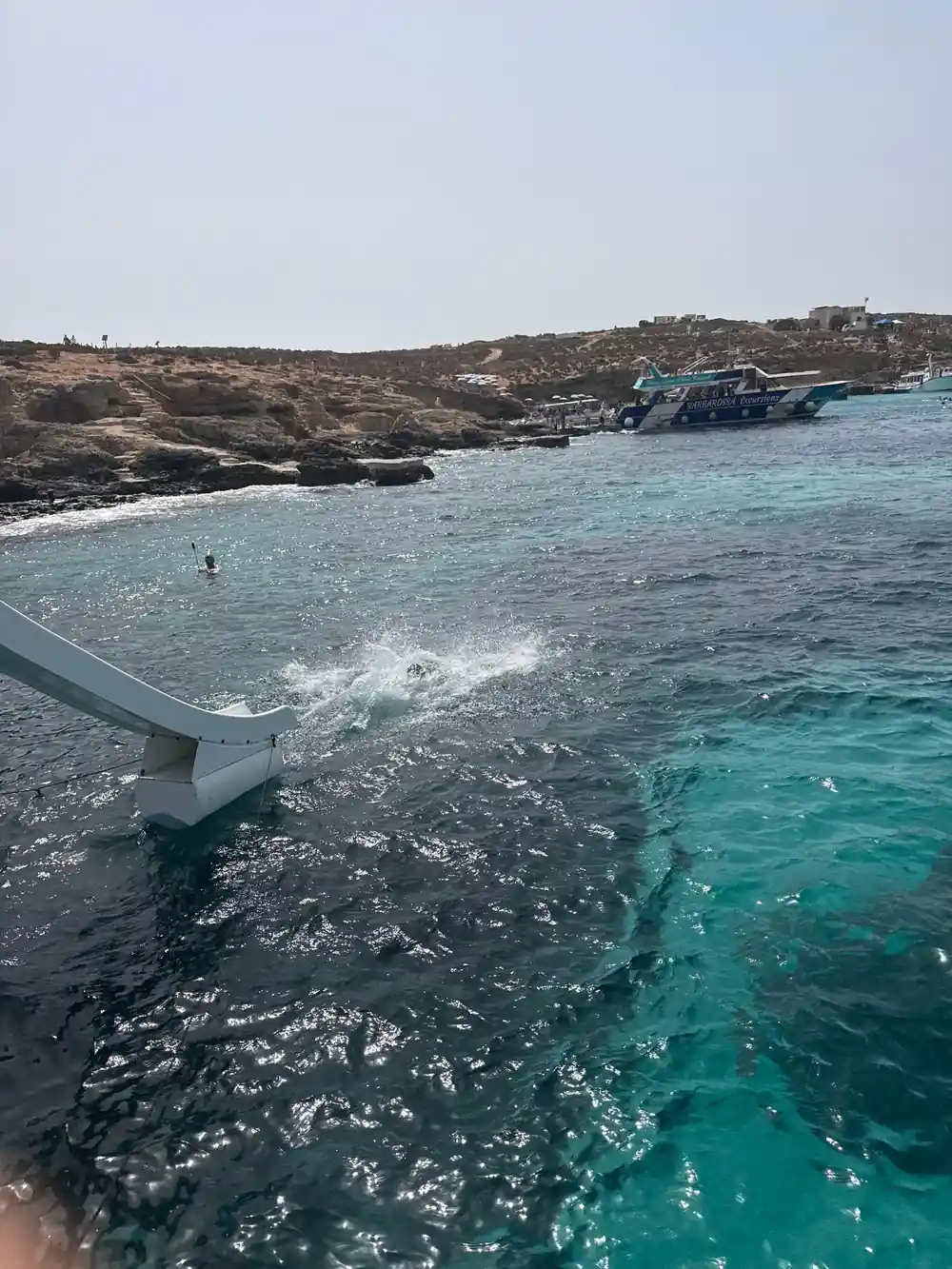
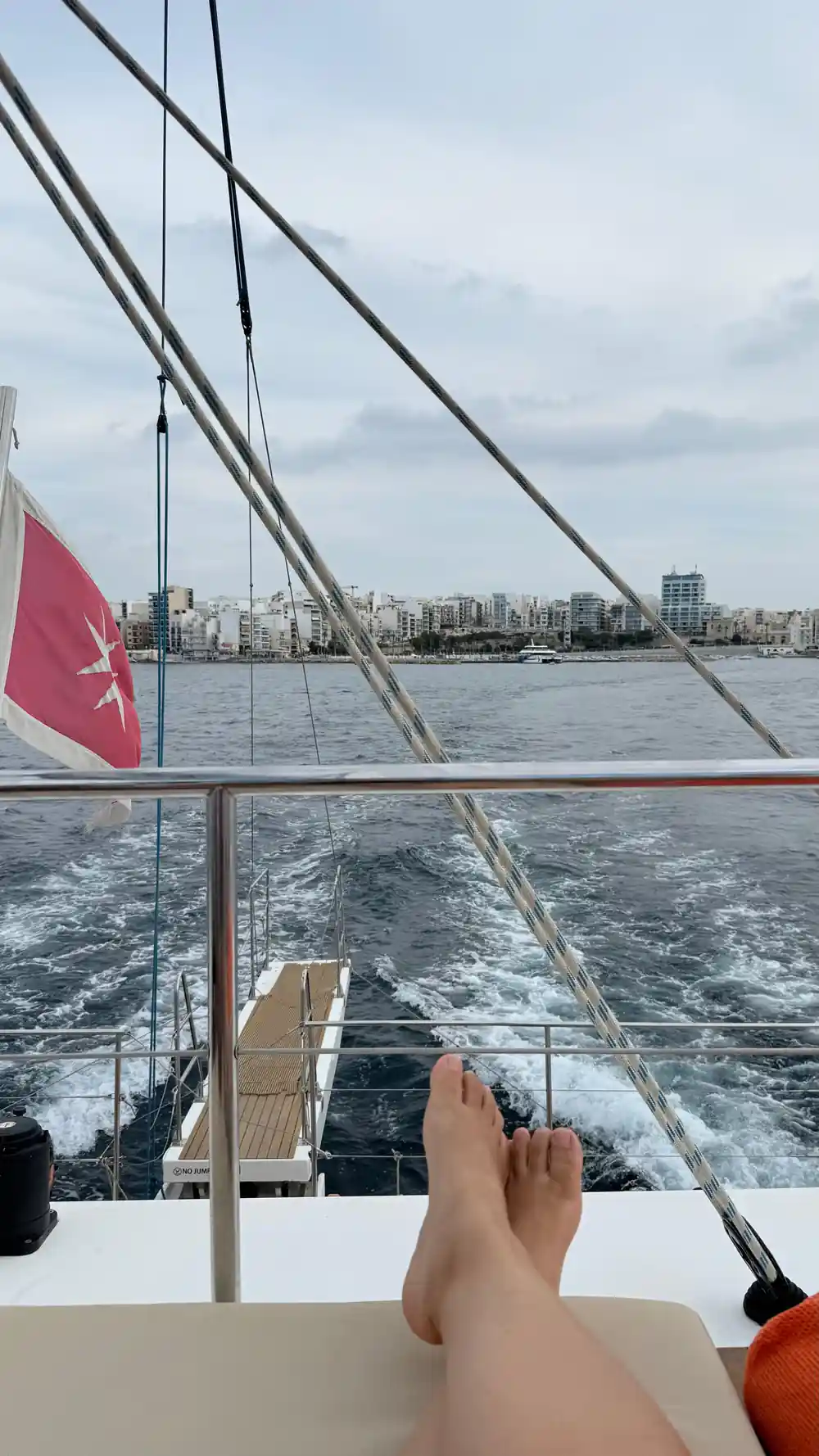
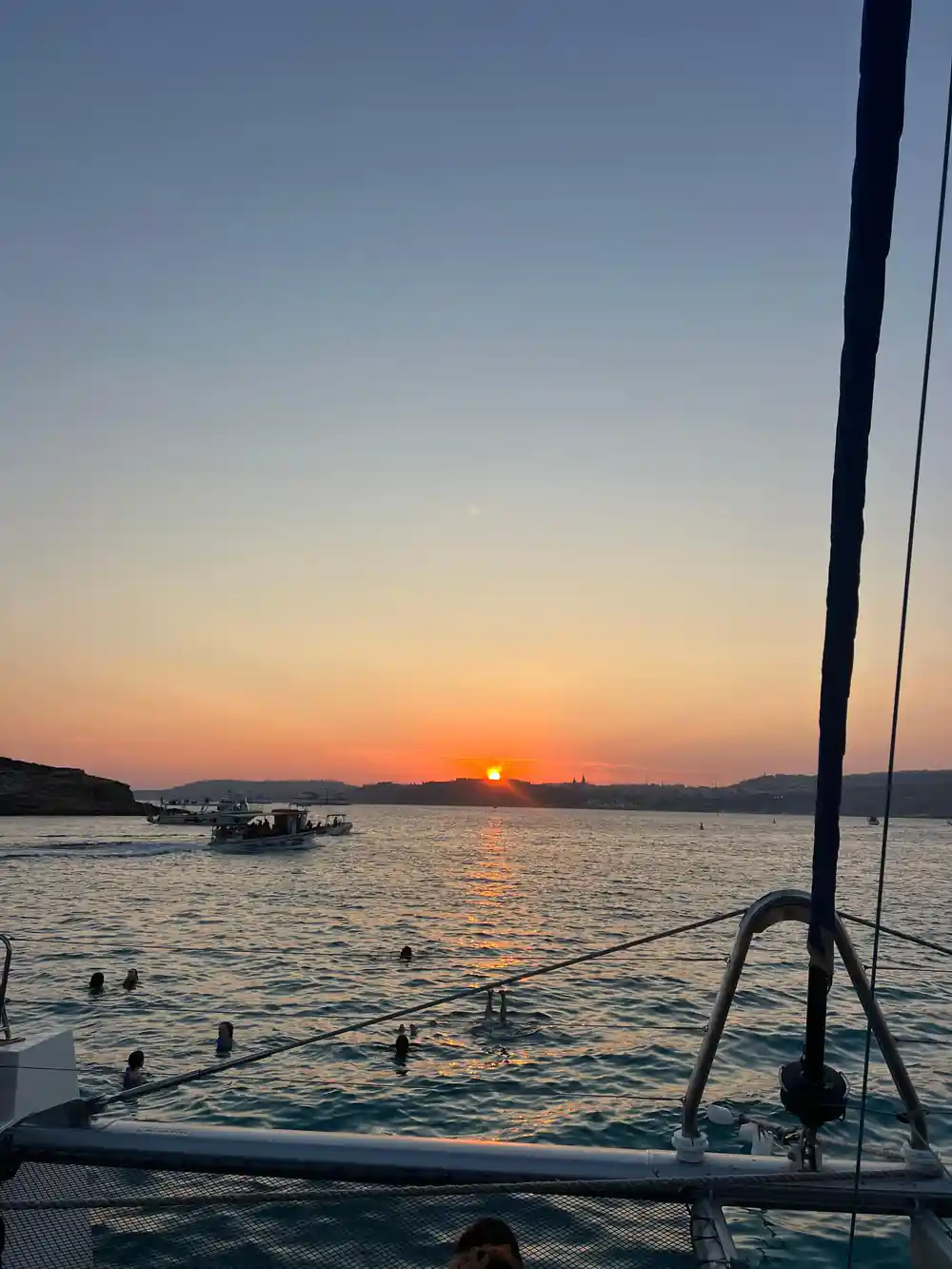
Evenings on this stretch of coast have their own rhythm. Boats leave while the light is still hard and bright, the deck is warm underfoot, and half the passengers are in swimwear within minutes. An hour or so later the cliffs start to throw long shadows, the water loses its glare, and by the time you are heading back the sky over the channel has gone from blue to apricot to a deep ink-blue dark. There is no better hour to be on the water around Comino, and no clearer way to see how small and rocky the island really is.
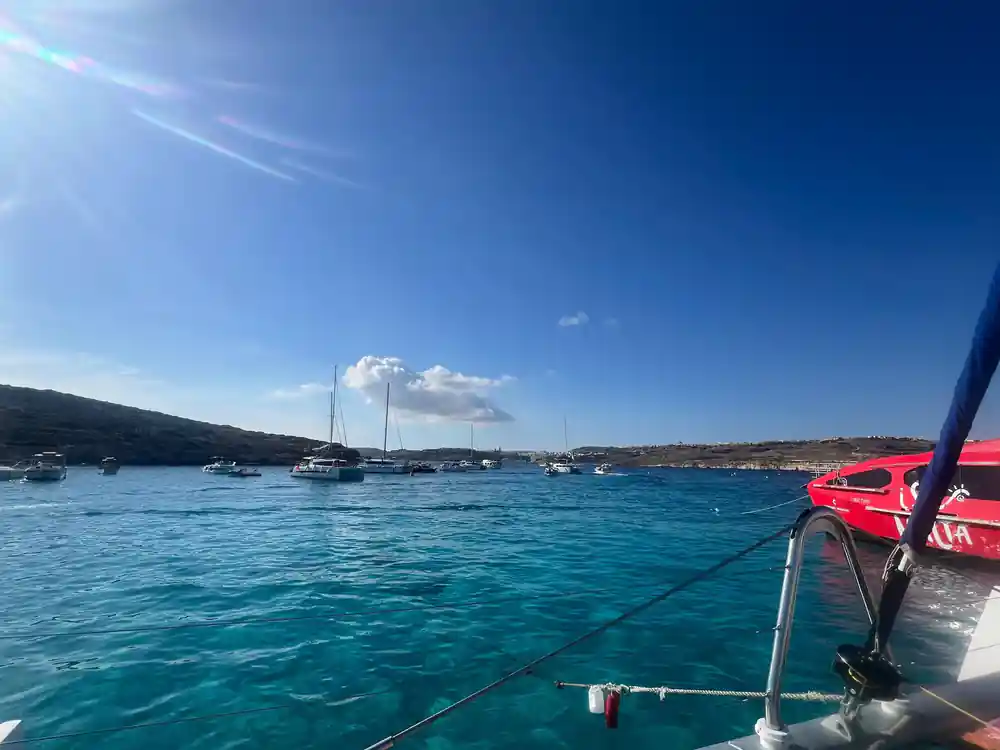
The route covers Santa Maria Bay, the Blue Lagoon, Crystal Lagoon and the Santa Maria Caves, so one evening gives you both the famous lagoon and the quieter one next door.[1] Crystal Lagoon sits a short distance from the Blue Lagoon and is the lesser-known and less crowded of the two.[6] If you are weighing up a short ferry hop against a full evening afloat, the difference is time on the water and the quality of light you see it in.
What the evening changes
Daytime at the Blue Lagoon is busy. In peak summer, through July and August, the lagoon receives between 2,500 and 3,500 visitors per day.[2] Evening boats arrive as the day trips wind down, so the same water feels like a different place: fewer swimmers, more room on the rocks, and enough quiet to hear the sea slapping the hull. You also get stretches of coastline to yourselves in a way that daytime boats rarely manage.
The sea stays swimmable for much of the year. Average sea temperatures run at 26°C in July, 27°C in August and 26°C in September, and they are still around 24°C in October.[3] Malta also gets more than 3,000 hours of sunshine per year, so a washed-out evening is the exception rather than the rule.[7] Sunset in midsummer comes late, which stretches the golden hour and gives you more time in the water before the light goes.
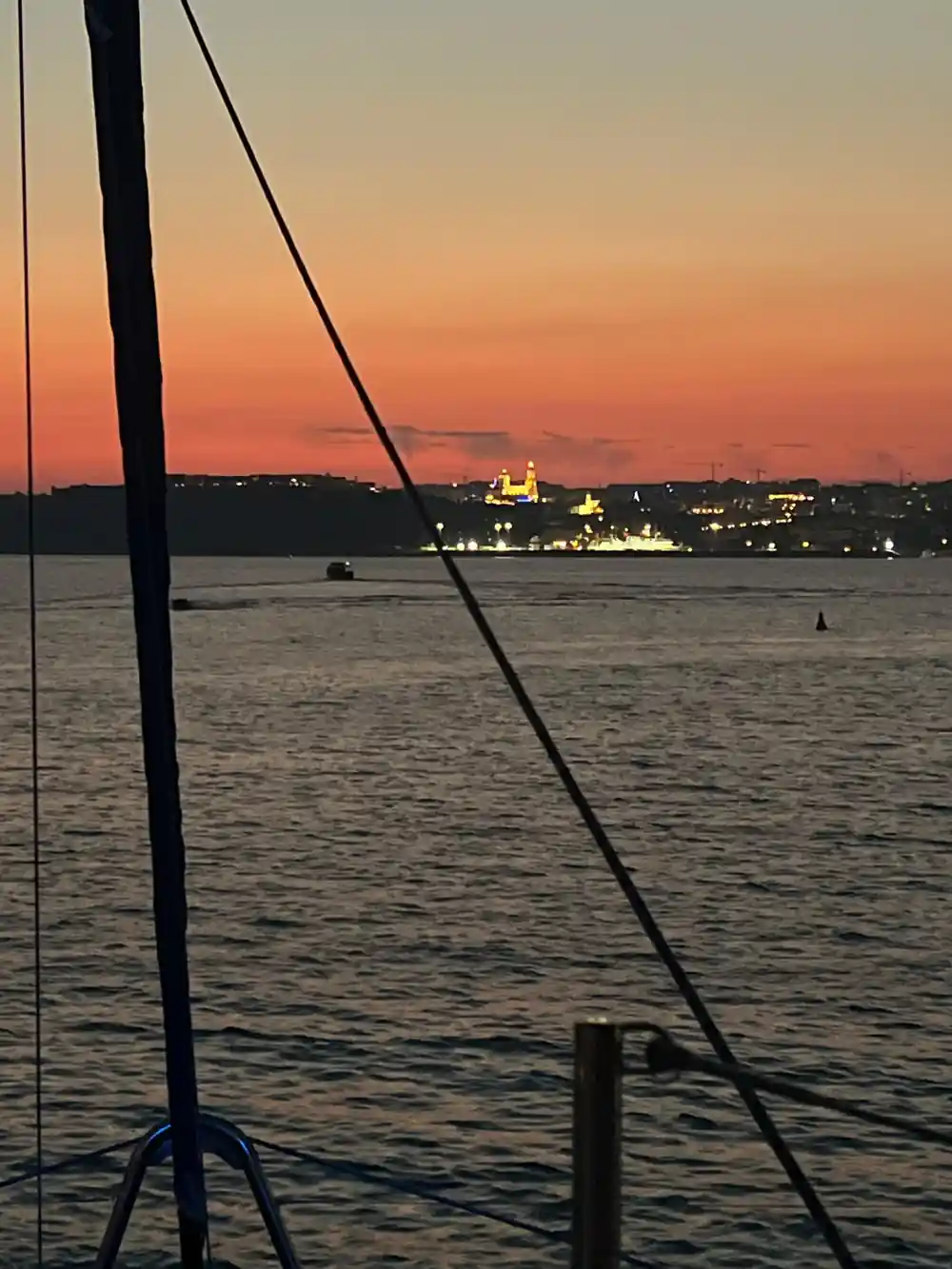
The last light on the channel between Comino and the Gozo coast
Where the sun actually goes down
From the water the sun drops behind the low ridge of the Gozo channel, and the last of the light catches the honey-coloured stone of Santa Marija Tower on Comino. The tower was built in 1618 by Grand Master Alof de Wignacourt as part of a network of coastal watchtowers across the Maltese Islands, and from a boat it still looks like exactly what it was: a lookout placed where it could see everything coming.[8] Comino itself is small, roughly 2.8 square kilometres of limestone, low scrub and a few tracks.[9]
The lagoon's colour is a trick of the seabed. The sandy bottom reaches 14 metres at its deepest and reflects the light that gives the lagoon its iconic turquoise colour from above.[10] At midday that reflection is bright and almost artificial. As the sun drops, the same pale sand turns the water copper and rose, and the limestone around it goes gold. Photographers who come for the turquoise water often leave with the sunset shots instead.
What you give up for the evening light
The honest trade-off is time. A sunset sailing is an evening out rather than a beach day, and much of it is spent on the boat instead of on the island. Snorkelling reads better in flat, bright light, and photographers lose the hard shadows that make the caves legible. You also give up a long daylight wander across Comino, although the evening route still puts you in the water at the Blue Lagoon and at Crystal Lagoon.[1]
If daylight swimming matters more, the daytime catamaran trip is a good alternative: from US$63, between 5 and 6 hours, with a 4.68 rating from 6,838 reviews.[11] If you want sunset without a long evening out, the Bugibba afternoon swim and sunset cruise runs 4 hours from US$35 and holds a 4.52 rating from 1,011 reviews.[4]
Weather is the other variable. High summer evenings are reliably warm, with July averaging 27°C, while a spring or autumn evening often needs a jacket on deck.[12] Sea temperatures follow the same curve, sitting at 22°C in June and 24°C in October.[3] Outside midsummer, choose the earlier departure if you can and take a layer for the ride home.
from US$35
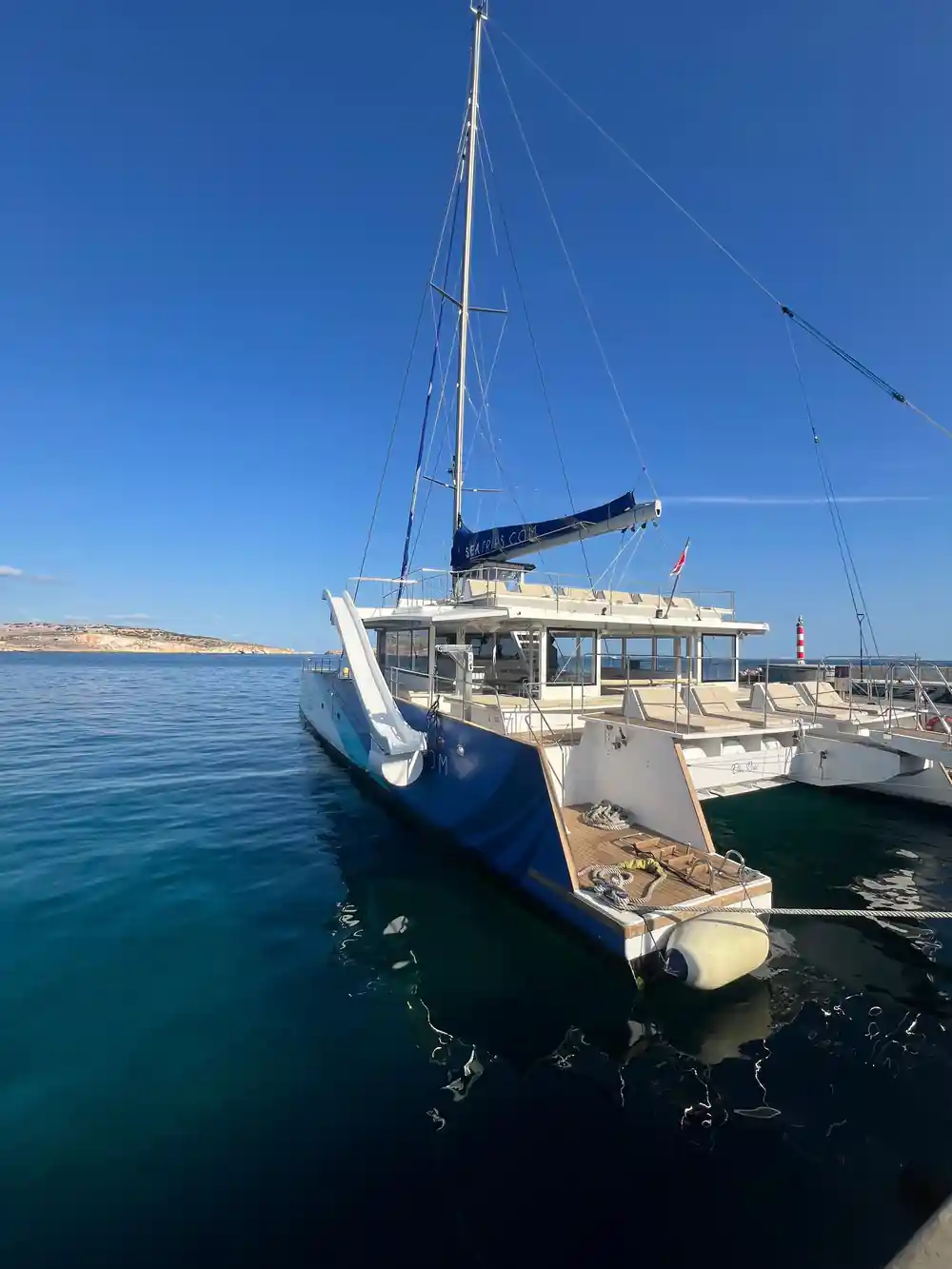
An evening sailing with swim stops, sea caves and the last of the light over Comino, with an English host or greeter on board.[1]
Which evening cruise to book
For the classic version, the Blue Lagoon sunset cruise is the straightforward pick: 6.5 hours, from US$35, an English host or greeter, and a route that takes in Santa Maria Bay, the Blue Lagoon, Crystal Lagoon and the Santa Maria Caves.[1] It suits couples, families and anyone who would rather swim at golden hour than queue for a sunbed. Reserve now and pay later keeps the decision low-risk, and free cancellation up to 24 hours before departure covers a change of plan.[1] Boarding details and starting times vary by date, so check availability when you book.
Other evening options have different shapes. The Blue Lagoon evening catamaran cruise runs 5 hours from US$63 and is listed as wheelchair accessible.[5] A Blue Lagoon sunset cruise with swim, snorkel and slide time runs 3.5 hours from US$29, rated 4.79 from 1,169 reviews.[13] If you would rather have a live guide and a longer island route, the Sliema boat trip to Comino, Gozo and the caves is 5 hours from US$46 with a 4.75 rating from 3,226 reviews.[14]
Practical notes for an evening on the water
Take a thin jacket or long-sleeved top even on warm evenings, because the ride back after sunset is cooler than the deck was at boarding. Bring a towel, a dry bag for your phone, and shoes you do not mind getting wet. Sunscreen matters more than people expect at golden hour. If you are prone to seasickness, sit towards the middle of the boat and watch the horizon rather than your screen. There is usually shade on deck and sun on the nets, so move around and find your spot.
Comino is a Bird Sanctuary and forms part of the EU Natura 2000 network, with a Special Protection Area designation under the Birds Directive, so keep to the paths and leave the cliffs and the birds alone.[15] The Santa Maria Caves are a popular dive site with at least 10 known caves that divers can explore.[16]
Money and timing are simple. Reserve now and pay later means you can hold a place without paying upfront, and free cancellation up to 24 hours in advance covers most changes of plan.[1] Peak summer departures sell out first, and visitor numbers keep climbing: Malta welcomed 3.56 million visitors in 2024, a record-breaking year.[17]
Comino beyond the sunset
Comino has a film career as well as a swimming one. The 2002 film, the 2024 TV series and La Comtesse de Monte-Cristo used locations on the island.[18] Between the tower, the caves and the water, it is easy to see the appeal: a small, bare island with a lot of drama at its edges. If you can, come back in daylight and walk up to the tower for the view across to Gozo.
Water temperatures swing widely through the year. Average sea temperatures are 27°C in August, 19°C in December and 16°C in February, so a winter dip is a different sport altogether.[3] Air temperatures follow the same curve, with July averaging 27°C and January 13°C.[12] The Blue Lagoon is at its most forgiving in the warm months, and its colour at sunset is worth the trip on its own.
Average sea temperature in Malta by month
Average sea temperature by month for Malta, from Maltalingua's published climate data.[3]
From prices for evening and sunset options
US dollar from prices for the listed tours: from US$35 sunset[1], from US$35 afternoon[4], from US$63 catamaran[5], from US$29 sunset with slide[13].
When to book an evening at the Blue Lagoon
Planning the evening
Pick your date
Choose a month with warm water. Average sea temperatures are 26°C in July, 27°C in August and 26°C in September.[3]
Book the sunset sailing
The sunset cruise runs 6.5 hours from US$35 with an English host or greeter, and you can reserve now and pay later.[1]
Plan your transport
Evening boats finish after dark, so work out how you will get back to your hotel before you go.
Pack for two temperatures
Deck can be hot at boarding and cool on the way home. A hat, a thin jacket and a towel cover both.
Bring goggles
The route takes in the Blue Lagoon, Crystal Lagoon and the Santa Maria Caves, where there are at least 10 known caves.[16]
See the lagoon turn gold, then book your evening on the water
from US$35