At a glance
- A catamaran day to the Blue Lagoon and the bays around Comino that runs 5 - 6 hours and is rated 4.68 from 6,838 reviews.[1]
- Nets at the front for spray and views, shaded benches when you want to stay dry, sun beds along the deck, and the middle of the boat when the sea is choppy.
- Swimwear worn under your clothes, a towel, sun cream, a hat, water and a dry bag for your phone. Deck shoes or sandals you can kick off easily.
- Reserve now and pay later, and cancel up to 24 hours in advance for a full refund on the catamaran trip.[1]
- Average sea temperatures reach 27°C in August and sit at 19°C in May, so late spring and early autumn suit swimming.[2]
- Top choice Blue Lagoon catamaran from US$63 Duration5 - 6 hours[1]Rating4.68 from 6,838 reviews[1]CancellationFree cancellation[1]PaymentReserve now and pay later[1] Check availability
- Comino lagoon and caves from US$35 Duration6 hours[3]Rating4.65 from 7,387 reviews[3]CancellationFree cancellation[3]PaymentReserve now and pay later[3] See this tour
- Snorkel and slide cruise from US$35 Duration4 - 7 hours[4]Rating4.74 from 3,374 reviews[4]CancellationFree cancellation[4]PaymentReserve now and pay later[4] See this tour
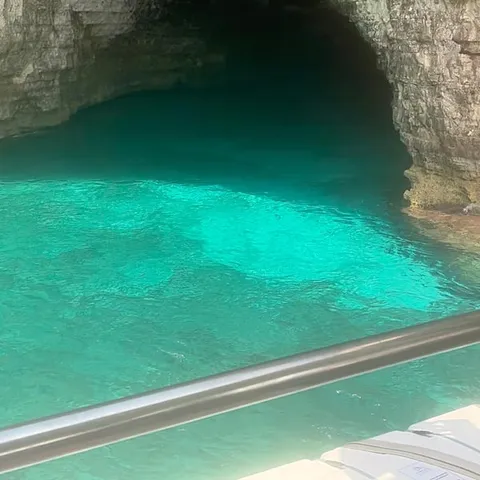
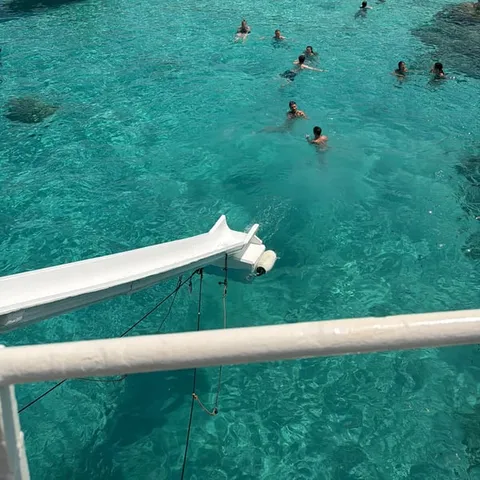
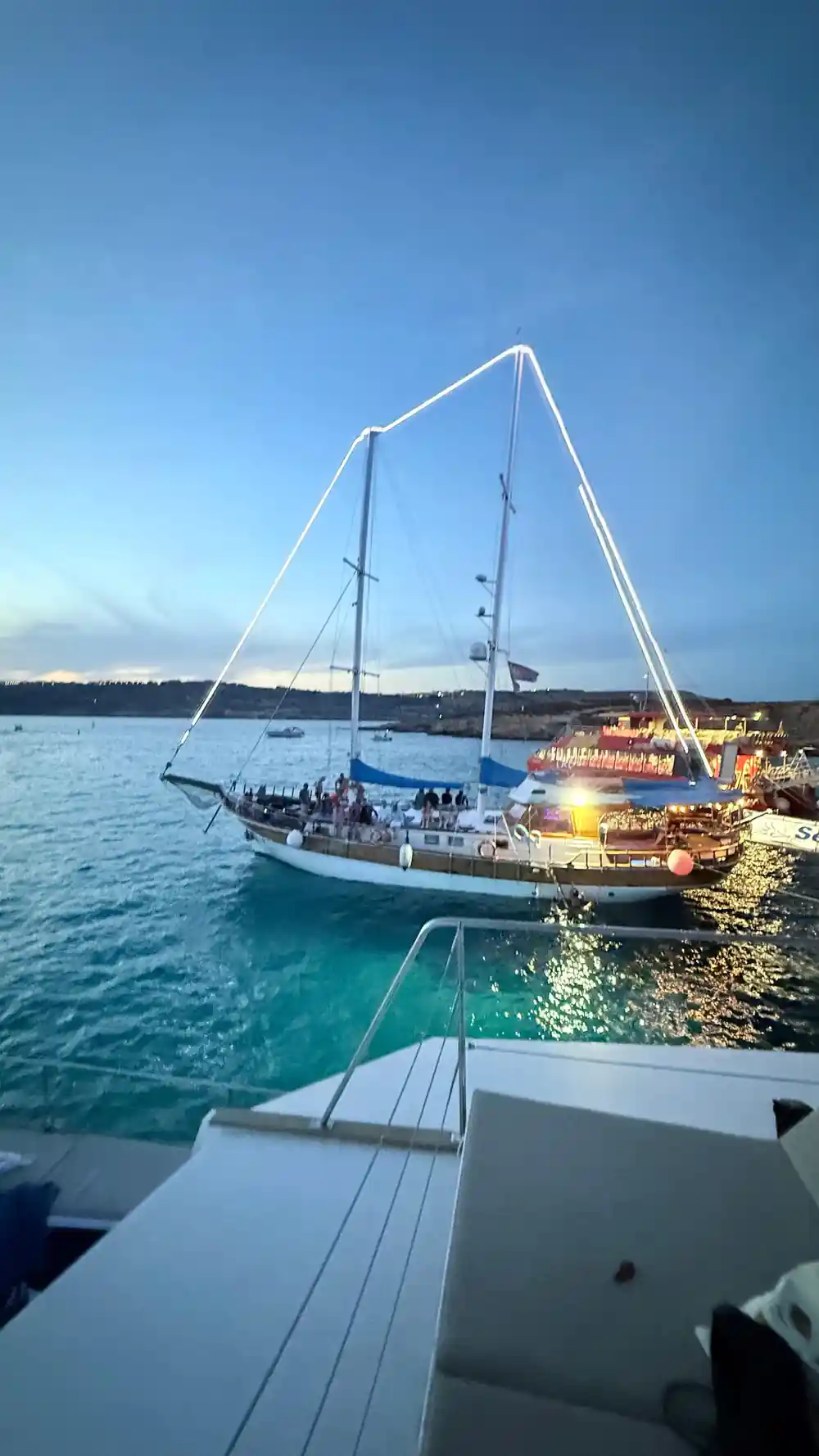
Just a stone’s throw away from the renowned Blue Lagoon lies a lesser-known and less crowded lagoon, the Crystal Lagoon!
Is the Blue Lagoon catamaran worth booking?
Getting ready
- Book ahead for summer dates and check the meeting point on your confirmation
- Sun cream, a hat and sunglasses: the deck is open and shade is limited
- Swimwear under your clothes, plus a quick-dry towel and a dry bag
- A little cash or a card for anything you want to buy ashore
On the day
- Arrive at the meeting point with time to spare before boarding starts
- Ask the crew for a hand getting in and out of the water if you need one
- Reef-friendly sun cream and a rash vest keep you comfortable on the nets
- The sea feels cooler than the air early and late in the season, so ease in
Why a catamaran and not a single-hulled boat
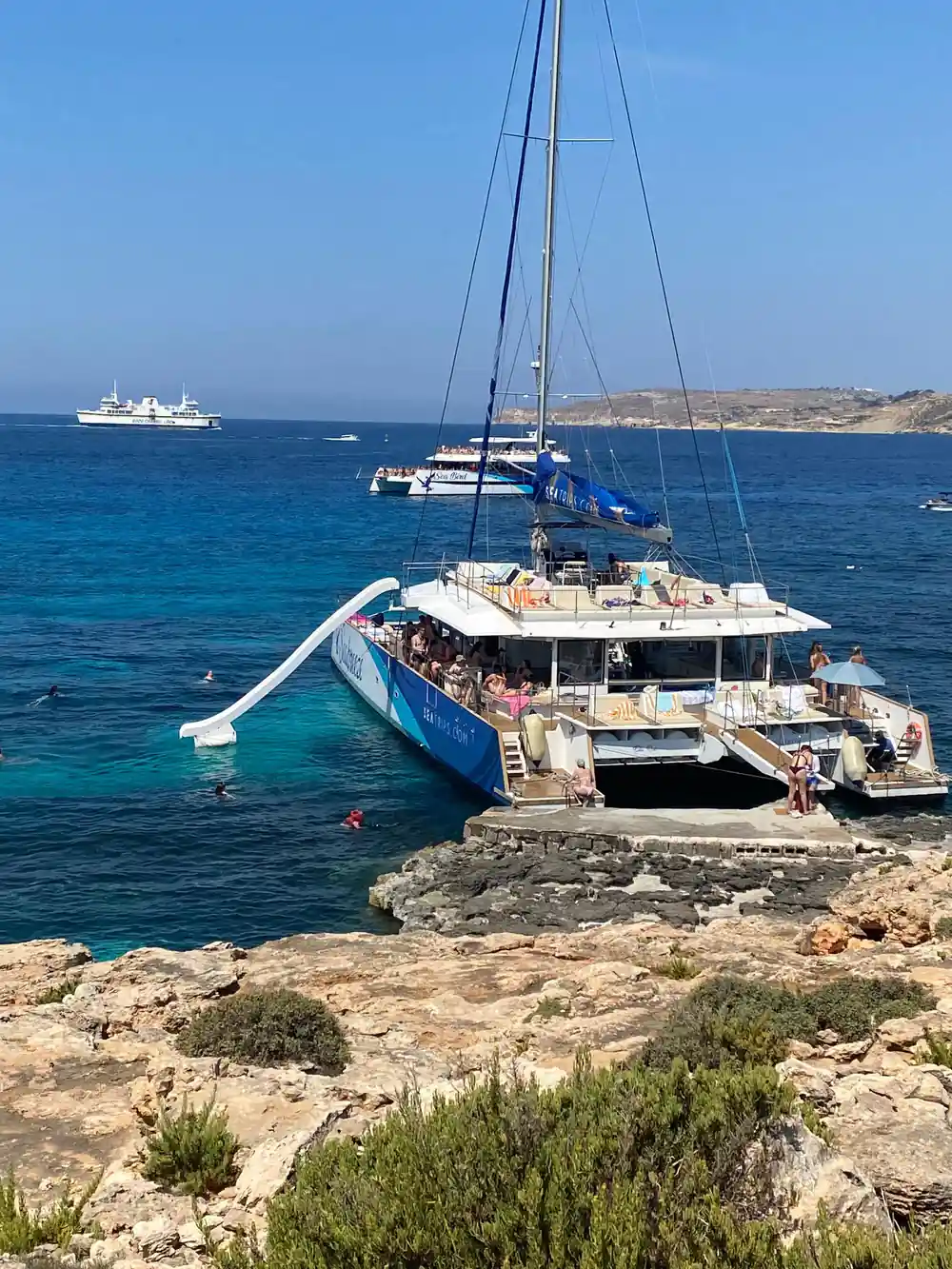
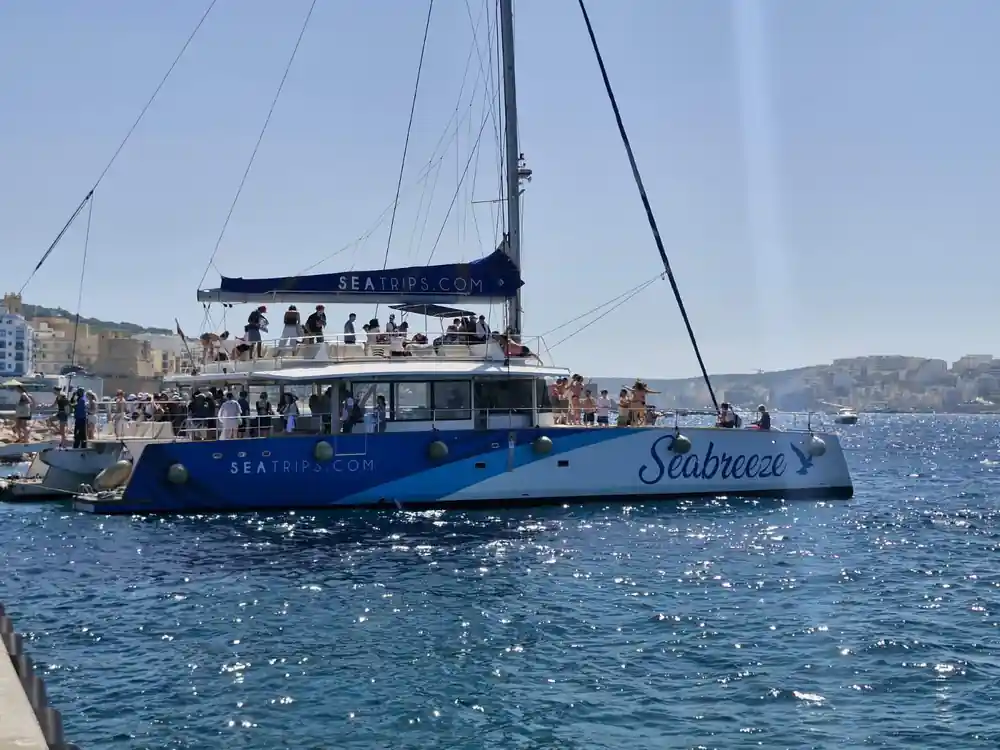
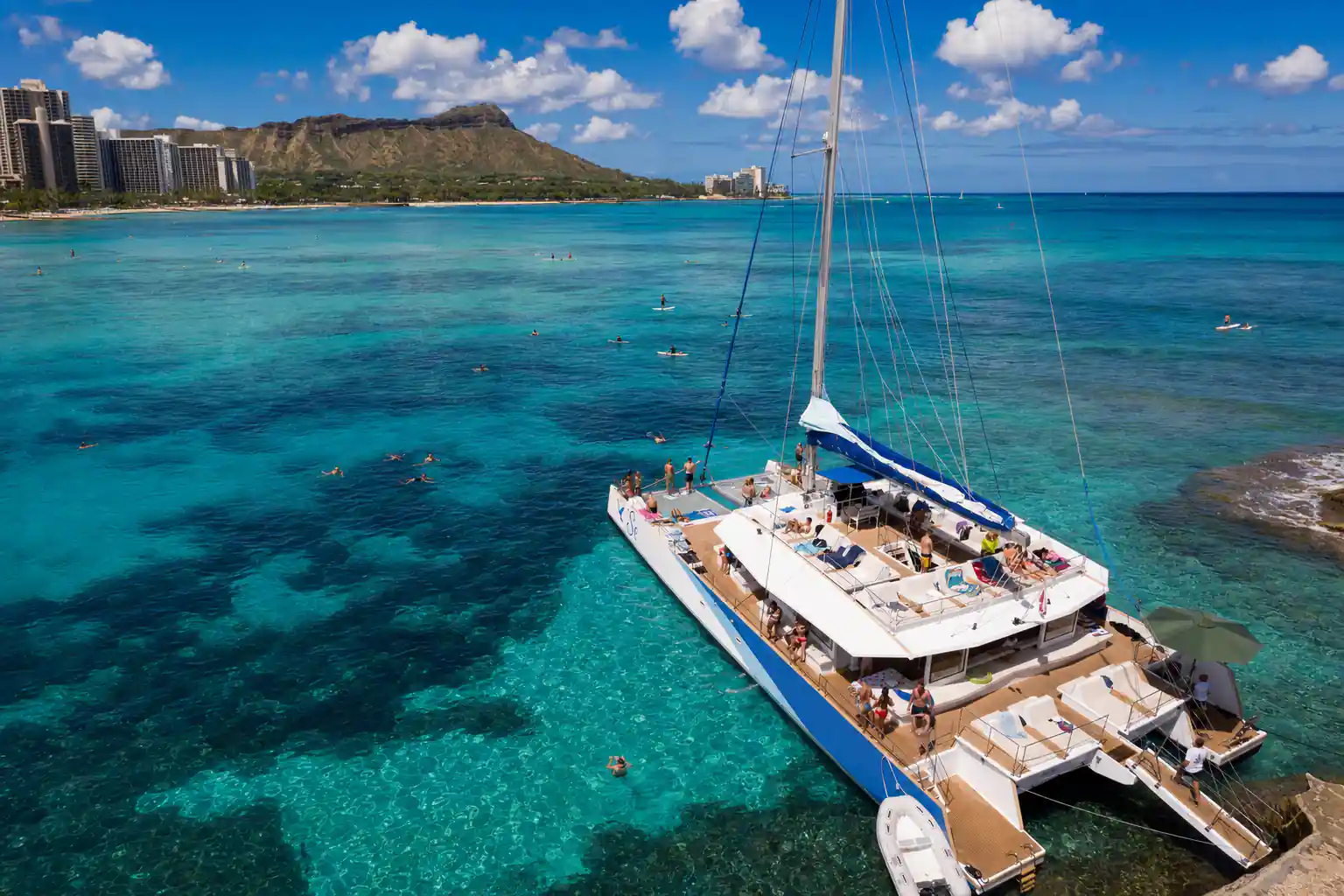
A catamaran rides on two hulls instead of one, and that single difference shapes the whole day. The platform under your feet stays level while a single-hulled boat leans over with every wave, which means drinks stay in their cups and nobody spends the crossing gripping a rail. The wide deck gives you room to walk about rather than one narrow strip where everyone shuffles past each other. There is space to sit facing forward, space to stand at the rail, and space to spread a towel without asking anyone to move. For a lagoon day with swim stops, that steadiness and room matter more than outright speed.
The Blue Lagoon catamaran trip runs 5 - 6 hours with an English-speaking host or greeter, and it is rated 4.68 from 6,838 reviews.[1] Reserve now and pay later if that suits you, and you can cancel up to 24 hours in advance for a full refund.[1] On the water the difference is obvious. Instead of sitting in a row with a view of the person in front of you, you can stand at the rail, lie on the nets or wander to the front deck while the coastline slides past. Twin hulls also mean two bows and a broad, open front, which is where most people end up on a warm, calm day.
The nets, and why people love them
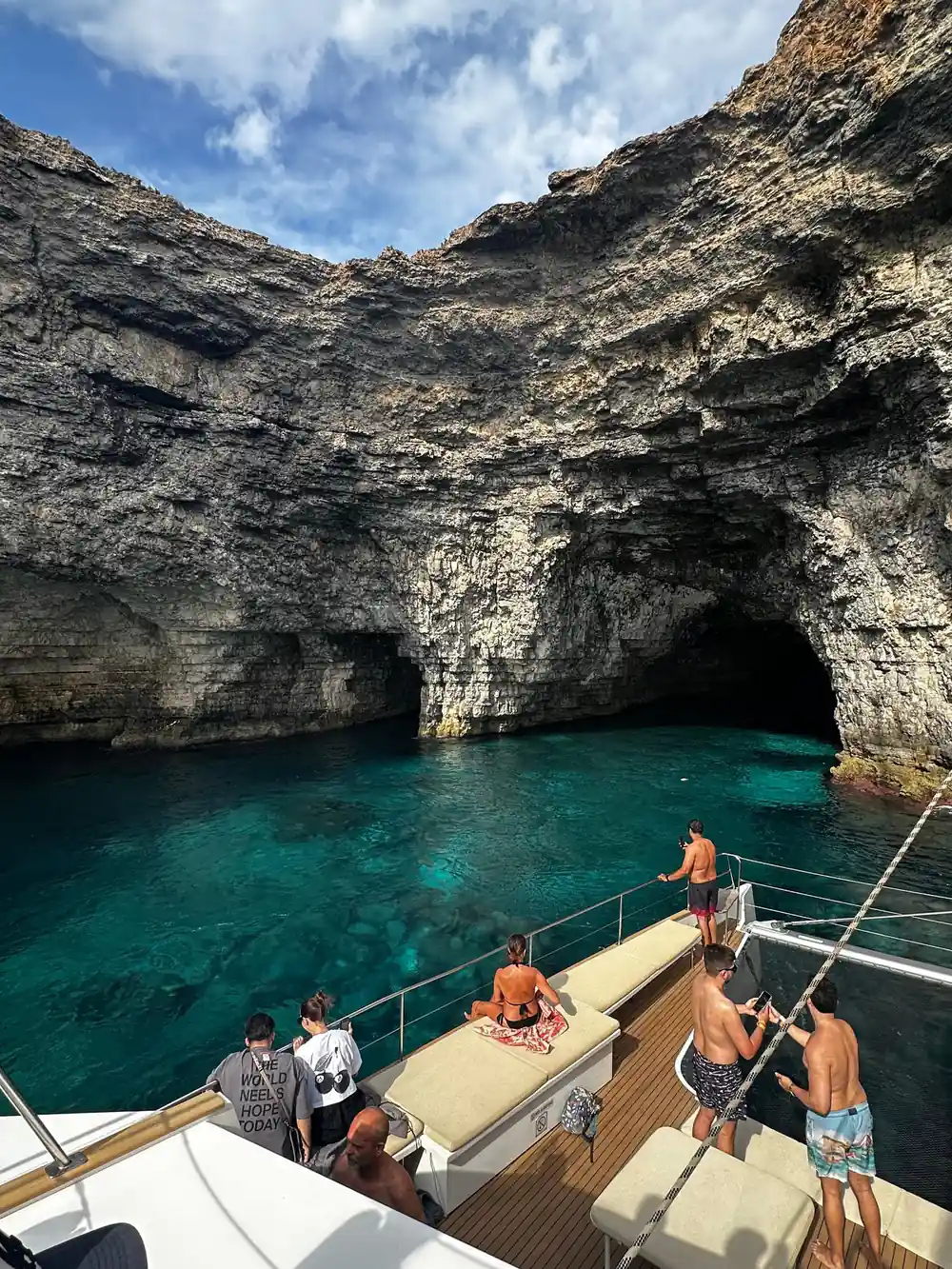
The trampoline netting strung between the two hulls is the part people remember. You lie flat with the water rushing underneath, close enough to watch the sand and the rocks pass, and on a faster stretch the spray comes up through the mesh and cools you down. It is not the spot for a dry set of clothes, a loose hat or an unguarded phone, and it takes a minute to trust that the net will hold you. Shoes come off before you climb on, and it is worth holding on with one hand whenever the boat turns or picks up speed.
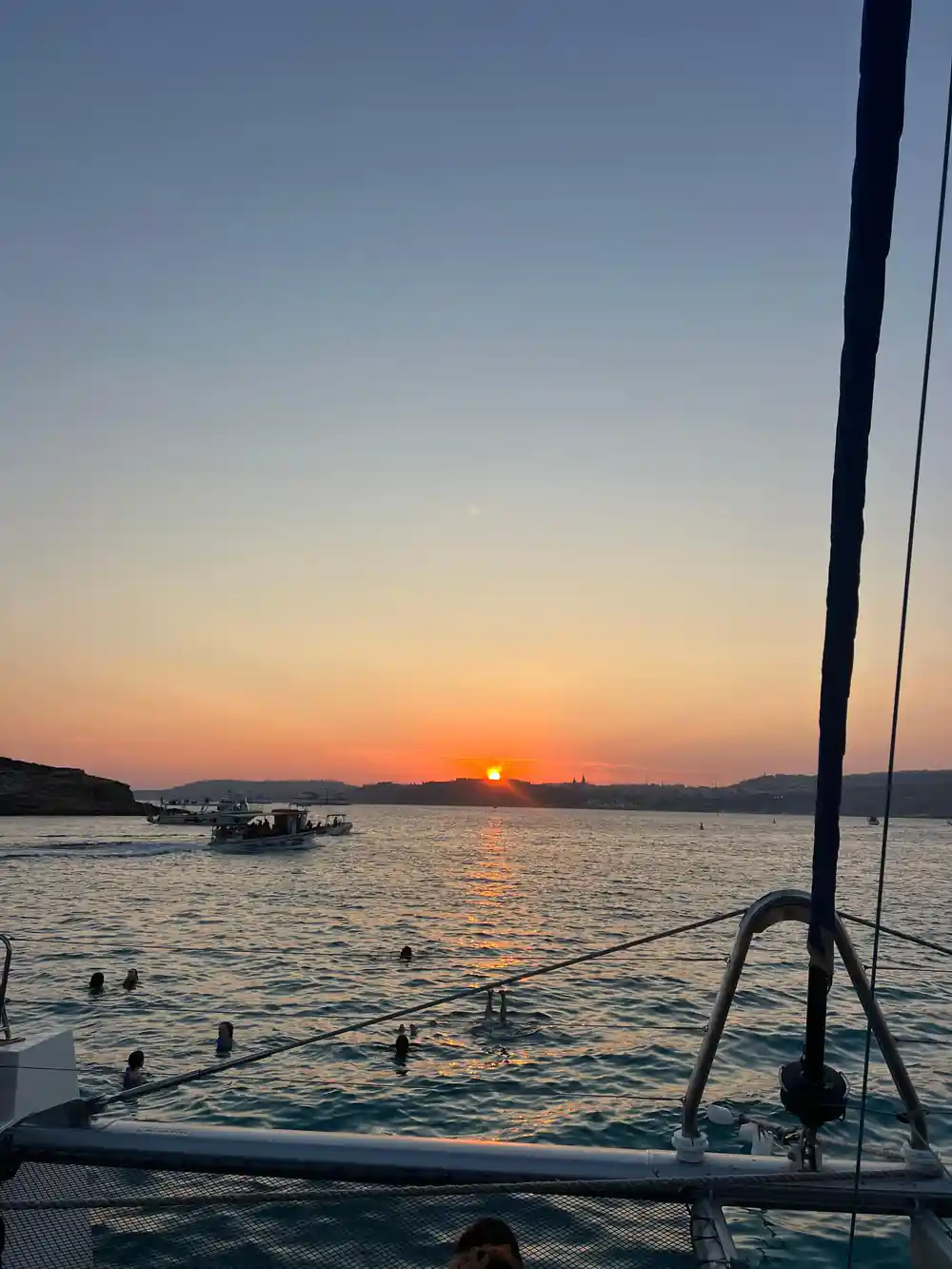
Get to the nets early on a busy day, because the front of a catamaran has room for a limited number of bodies. Children love it and can use it, but an adult should be within reach the whole time, and small children are better off on the benches when the sea is choppy. If you want to read, keep to the shaded seats; the nets are for watching the water go by, dozing and getting splashed. On the way home, when the light softens and the boat turns back towards Malta, the nets are also the quietest place on board.
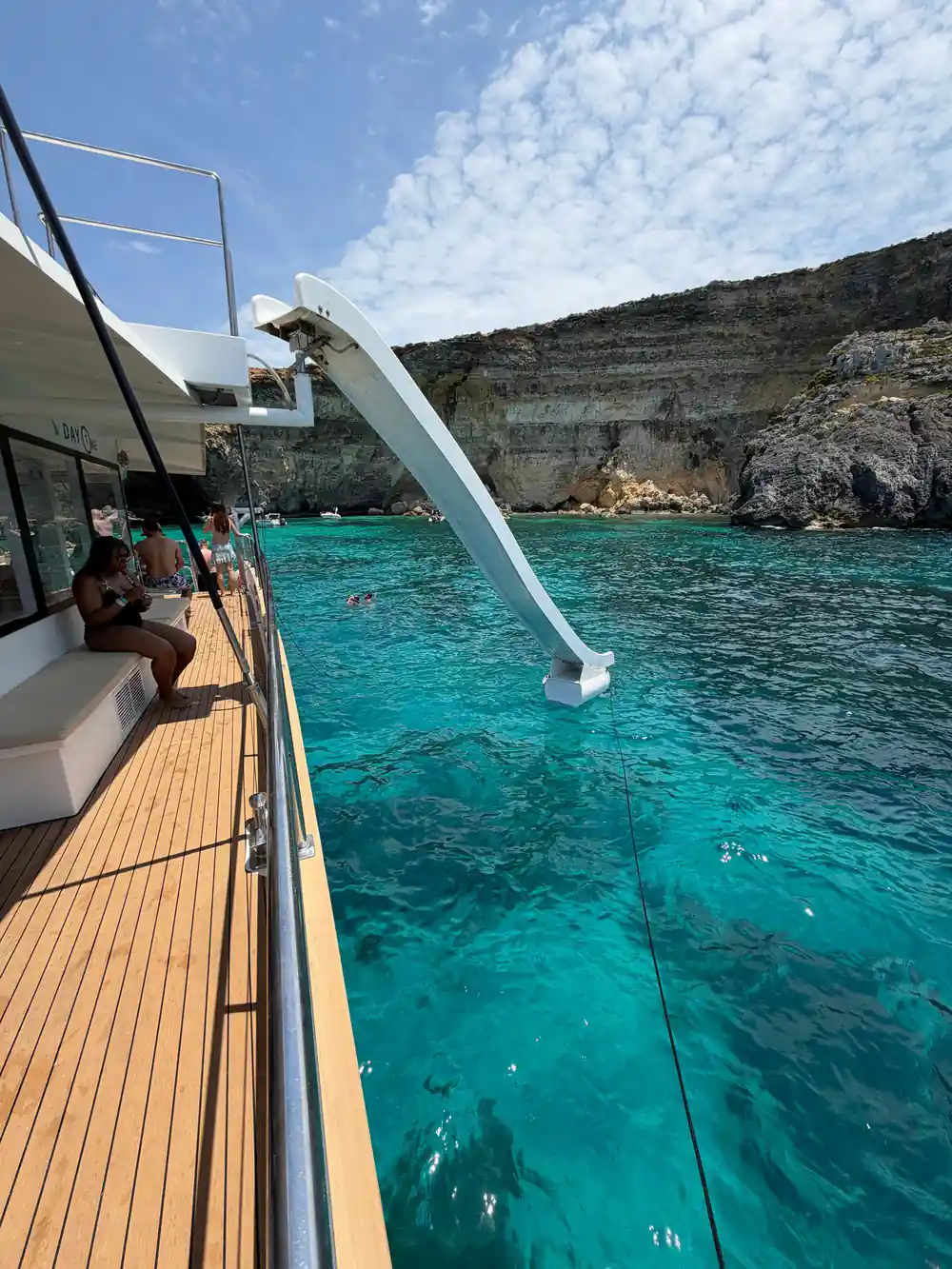
Trampoline nets between the hulls are the best seats on a calm day
Sun beds, shade and where to sit
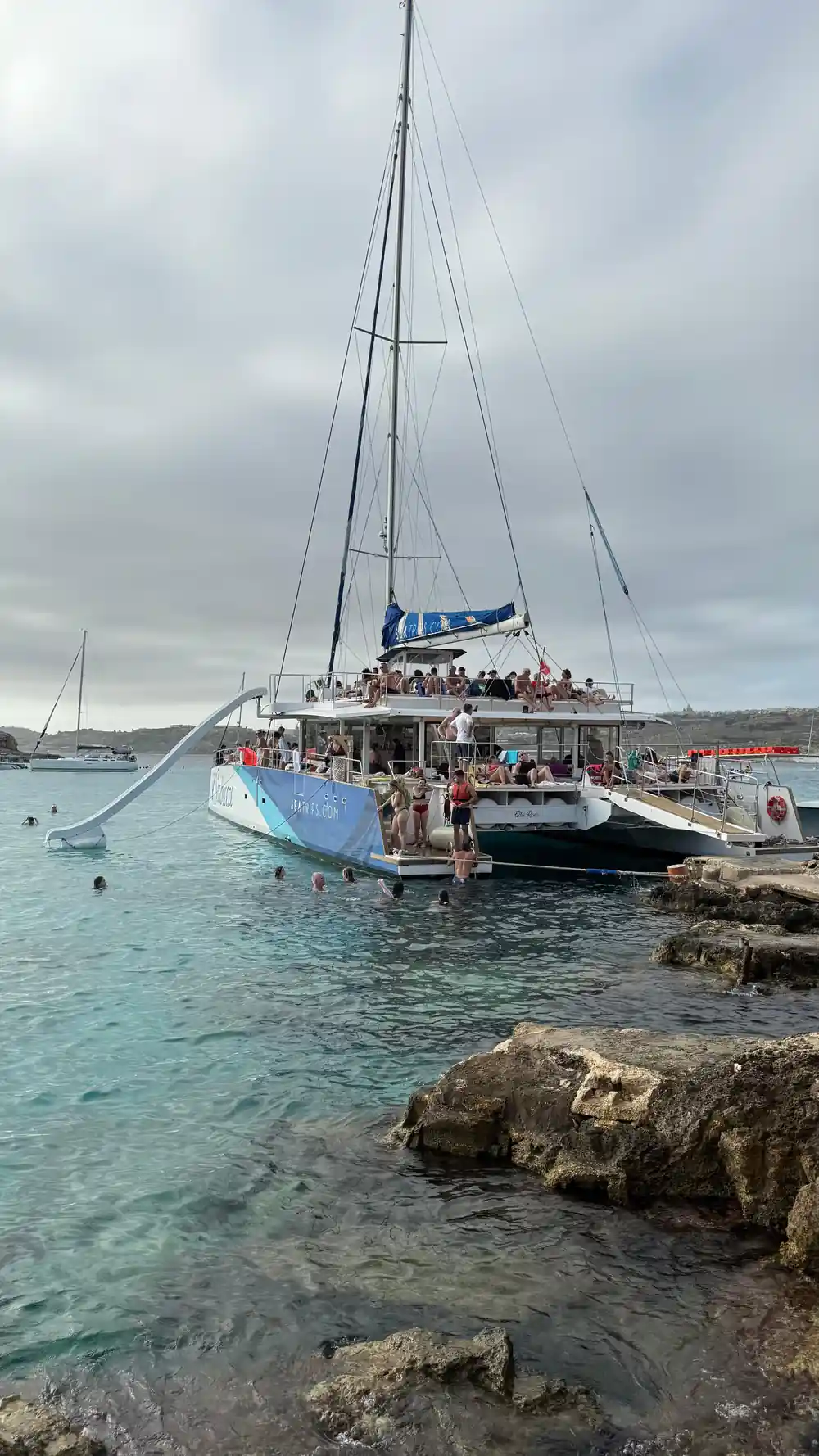
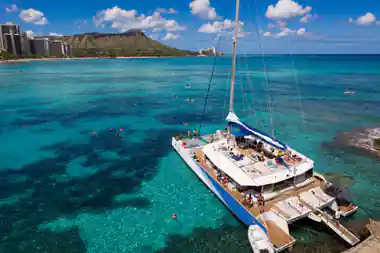
The deck is laid out in bands, so where you sit sets the tone for the day. Sun beds run along the sides for stretching out between swims, benches in the shade of the cabin suit anyone who burns easily or wants to read, and the front nets take the spray. Photographs from the catamaran show passengers lying along the deck with water on both sides, which is exactly how a calm summer afternoon looks up there. Walk the deck once when you board, pick your spot and leave your bag there instead of settling into the first seat you see.
Before you settle, think about the shape of the day. Most of the time is spent cruising and moored, with a couple of swim stops in between, so a seat you can leave and come back to works better than a nest of bags and towels. The middle of the boat moves least if the sea gets up, and the back platform is the quickest route to the water when the ladder goes down. If you are travelling with young children, the shaded benches give you a base with a handrail within reach.
The deck, the crew and the rhythm of the day
A day on the water has a rhythm. The catamaran pulls out, everyone finds a spot, and the first stretch is spent watching the coast drop away and Comino and Gozo come closer across the channel. Then the anchor goes down, the ladder comes out and the deck empties into the water. Crew work through the crowd with trays of food, and the afternoon settles into a slower pattern of swimming, drying off and dozing in the sun. Nothing about the day is rushed, which is the point of going by boat rather than driving the coast road.
Take a little cash or a card in case you want something ashore at Comino, and watch the crew when you are on the beach: they will call everyone back when it is time to move to the next bay. The day is short enough that you will not run out of anything, and long enough that a hat, water and a dry towel earn their place in your bag. Keep a light layer handy for the ride home, when the wind on the water feels cooler than the beach did.
from US$63
The Blue Lagoon catamaran trip runs 5 - 6 hours and is rated 4.68 from 6,838 reviews.[1]
Getting in and out of the water
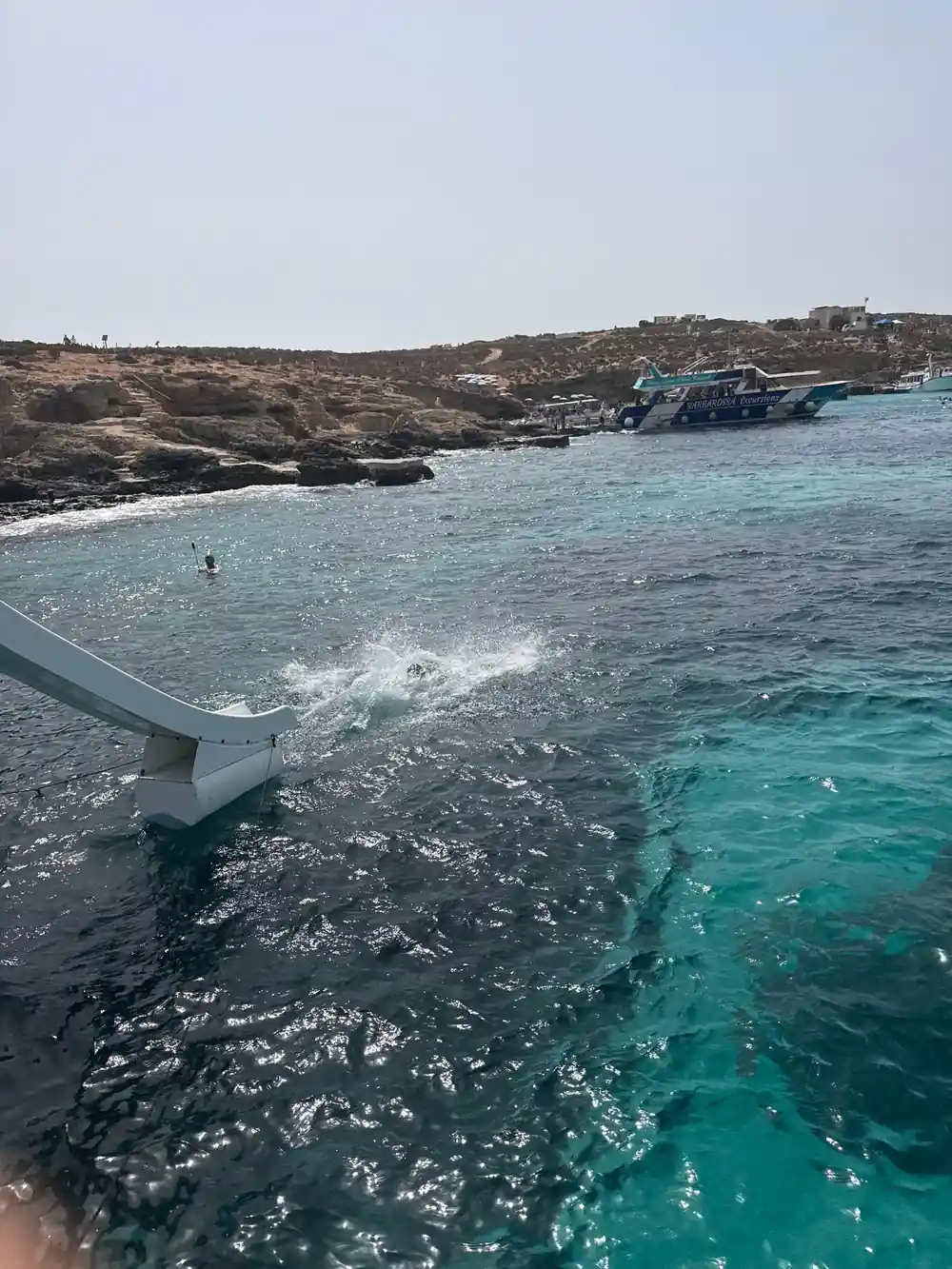
Swim stops are the point of the day, and getting in is easier than it looks. Catamarans usually have steps or a ladder at the back, and the crew will show you where to enter and how to come back up. Take your time, keep one hand on the rail, and wait until the person ahead of you is clear of the ladder before you start climbing. Jumping off the side is fun, but ask the crew first and stay well away from the engines. If you have your own mask and snorkel, bring them, since they take up almost no room in a day bag.
Snorkelling is best near the rocks, where the water is shallow and bright and the fish gather. Stay where you can see the boat and the crew, look up often, and keep an eye on how far the current has carried you. The Blue Lagoon reaches 14 metres at its deepest, and it is the sandy bottom reflecting the light that gives the water its famous colour from above.[5] That colour is at its best in the middle of a sunny day, so plan your longest swim for the brightest hour.
Under sail, and under engine
A catamaran can sail or run on its engines, and most lagoon trips do a bit of both. Under sail the ride goes quiet and the boat heels far less than a single hull, so the table stays level and the drinks stay put. Whether the sails go up on your crossing depends on the wind and on the skipper's plan for the day, and on a short run between bays the engines often do most of the work. Either way, you are on a broad, stable platform with the sea passing underneath.
The gentle motion makes a catamaran a comfortable choice for families, for anyone who usually feels queasy on boats and for people who want to move around while the coastline goes past. If you are prone to seasickness, sit towards the middle of the boat, stay out in the fresh air and keep your eyes on the horizon rather than on your phone. A light breakfast is a better plan than a heavy one, and travel tablets work best when taken before you step on board, not after.
Where the trip goes, and when to go
Comino is small: approximately 2.8 square kilometres of rock, low scrub and a handful of buildings between Malta and Gozo.[6] The Blue Lagoon sits on its western side, and the Santa Marija Caves nearby are a popular dive site with at least 10 known caves.[7] Above the water, Santa Marija Tower was built in 1618 by Grand Master Alof de Wignacourt, and it is an easy landmark to pick out from the deck.[8] Comino is a Bird Sanctuary and part of the EU Natura 2000 network, with a Special Protection Area designation under the Birds Directive.[9] Away from the lagoon, the island is rough, low and quiet.
Crystal Lagoon is a lesser-known and less crowded lagoon a short distance from the Blue Lagoon, and it is often the calmest half of the day.[10] Timing matters too. In peak summer, July and August, the Blue Lagoon receives between 2,500 and 3,500 visitors per day.[11] Malta gets more than 3,000 hours of sunshine per year.[12] The variable is the sea, not the sky: average sea temperatures run from 16°C in February and March to 27°C in August, which makes late spring and early autumn the sweet spot for swimming.[2]
Average sea temperature in Malta, month by month
Average sea temperature by month for Malta, as published by Maltalingua.[2]
What a Blue Lagoon boat day costs
From-prices per person on GetYourGuide listings:[1][3][13][14]
When to book, and when to sail
Plan your catamaran day
Pick your date and book
Choose a calm, warm day if you can, then reserve now and pay later, with free cancellation up to 24 hours in advance for a full refund.[1]
Pack for a wet deck
Swimwear under your clothes, a towel, sun cream, a hat, drinking water, and a dry bag for phone and keys.
Find the meeting point
Check the address on your booking, arrive early, and look for the catamaran among the smaller boats at the quay.
Claim your spot
Nets for spray and views, shaded benches to stay dry, sun beds along the deck, and the middle of the boat if the sea picks up.
Swim, eat, dry off
Swim stops come with the ladder down and the crew watching. Food goes round on trays, then the boat turns for home.
Leave the evening free
The trip runs 5 - 6 hours, so keep the rest of the day loose and do not book anything tight for the evening.[1]
Spend a day on the Blue Lagoon catamaran
from US$64Reserve now & pay later