At a glance
- The Blue Lagoon, Beaches & Bays trip by catamaran runs 5 - 6 hours, costs from US$63 and is rated 4.68 from 6,838 reviews.[1]
- Small group listings are limited to 6, 8 or 10 participants depending on the boat, while private charters are booked as a private group.[2][3][4]
- Several Comino and Blue Lagoon listings are marked wheelchair accessible, including an 8 hour cruise from US$40 and a 3 - 4 hour cruise from US$35.[5][6]
- The catamaran trip has an English speaking host or greeter, and some cruises add audio guides in English, French, German, Italian and Polish.[1][7]
- Average sea temperature peaks at 27°C in August and stays at 26°C in July and September.[8]
- Top choice Catamaran, beaches & bays from US$63 Duration5 - 6 hours[1]Rating4.68 from 6,838 reviews[1]Guide or audioHost or greeter: English[1]CancellationCancel up to 24 hours in advance[1] Check availability
- Blue Lagoon & sea caves from US$35 Duration6 hours[7]Rating4.65 from 7,387 reviews[7]Guide or audioAudio guide: English, French, German, Italian, PolishCancellationCancel up to 24 hours in advance[7] See this tour
- Comino, Gozo & caves from US$46 Duration5 hours[9]Rating4.75 from 3,226 reviews[9]Guide or audioLive tour guide: English[9]CancellationCancel up to 24 hours in advance[9] See this tour
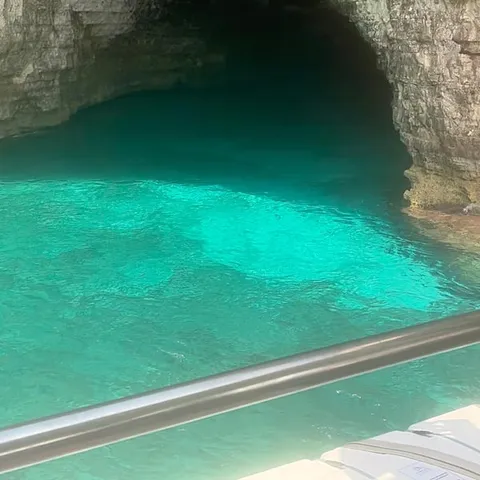
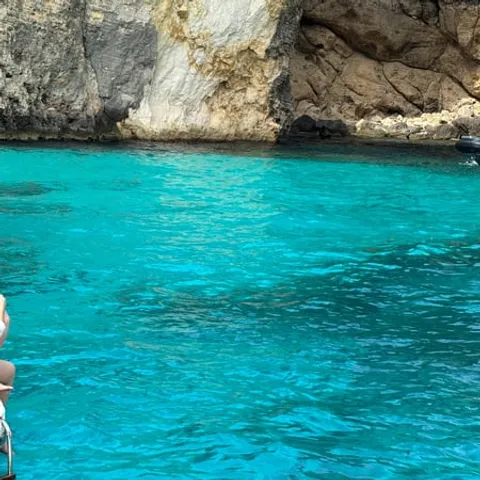
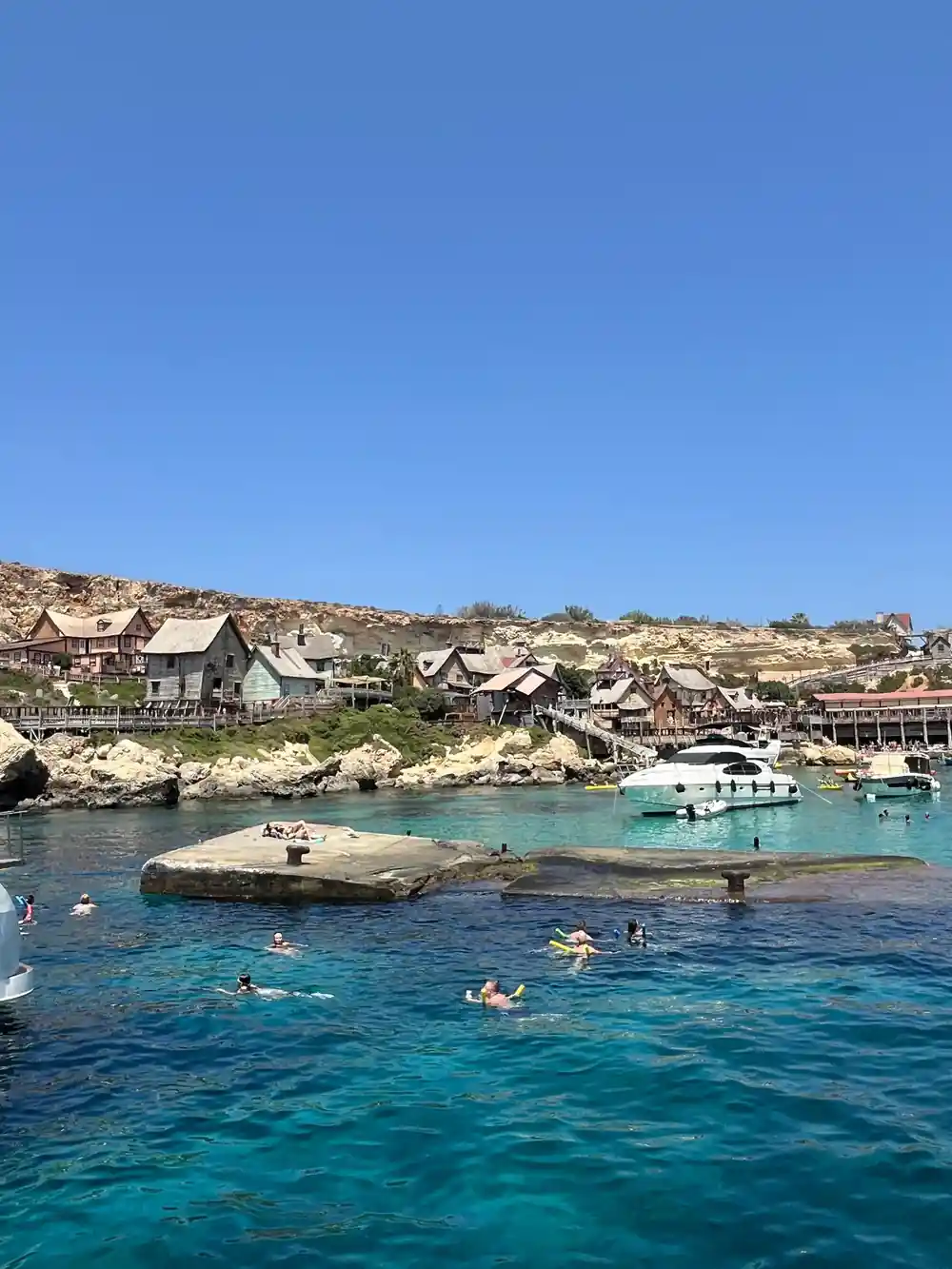
Just a stone’s throw away from the renowned Blue Lagoon lies a lesser-known and less crowded lagoon, the Crystal Lagoon!
Who the Blue Lagoon catamaran trip suits
Things to check
- Decide between a shared deck, a small group boat or a private charter
- Free cancellation on most listings, and reserve now and pay later
- Wheelchair accessible cruises, ferries and charters are listed
- From-prices are shown in US dollars on the tour listings
On the day
- Sun cream, a hat and sunglasses, even when the sky looks hazy
- The sea is warmest in August and still inviting in October.[8]
- Trips run from a short boat ride to a full day between islands
- Take a towel, a dry bag, a light layer and shoes you can slip off
The short answer: who can come
The things that decide whether a Blue Lagoon boat suits you are group size, the language spoken on board, how easy the boat is to get on and off, and how long you want to be at sea. Malta's Comino and Blue Lagoon trips run from shared cruises to small group boats and private charters. The catamaran trip booked from this site is a shared one: a 5 - 6 hour day with an English speaking host or greeter, from US$63, rated 4.68 from 6,838 reviews, with free cancellation up to 24 hours in advance for a full refund.[1]
Around it sits a wide spread of alternatives. A round trip ferry to the Blue Lagoon from Sliema or Bugibba is listed from US$35 and takes 255 minutes to 7 hours.[10] A Comino, Crystal Lagoon and sea caves tour runs 6 hours, from US$35, and is rated 4.65 from 7,387 reviews.[7] A boat trip from Sliema to Comino, Gozo and the caves is from US$46 and rated 4.75 from 3,226 reviews.[9]
Who you travel with matters more than which boat you pick. Small group and jet ski listings put a cap on numbers, and private charters are booked as a private group, which suits a family or a group of friends who want the deck to themselves.[3][11] If your group swims at very different speeds, or someone would rather stay dry, a shared boat with shade and a rail to hold is the simplest answer.
Shared deck, small group or private charter
On a shared cruise you book a seat and spend the day with everyone else who booked. Small group listings put a number on the party: one jet ski safari is limited to 6 participants, another to 8 participants, and a small group boat tour and a sunset cruise with a swim stop are each limited to 10 participants.[2][3][12][13]
Private charters are listed as private groups, and their from-prices sit far above the shared boats: from US$103 for a 2 hour charter, from US$248 for a 3 - 4 hour private boat trip, and from US$923 for a 4 hour private yacht.[11][14][15] Several of these trips list pickup, with drop-off locations at the end of the day.[16]
The practical question is how many people you are paying for. If a small group of you wants to swim from the same boat and stay together, a private charter keeps the party fixed. If there are just a couple of you, a shared cruise gives you the lagoon without paying for a whole boat.
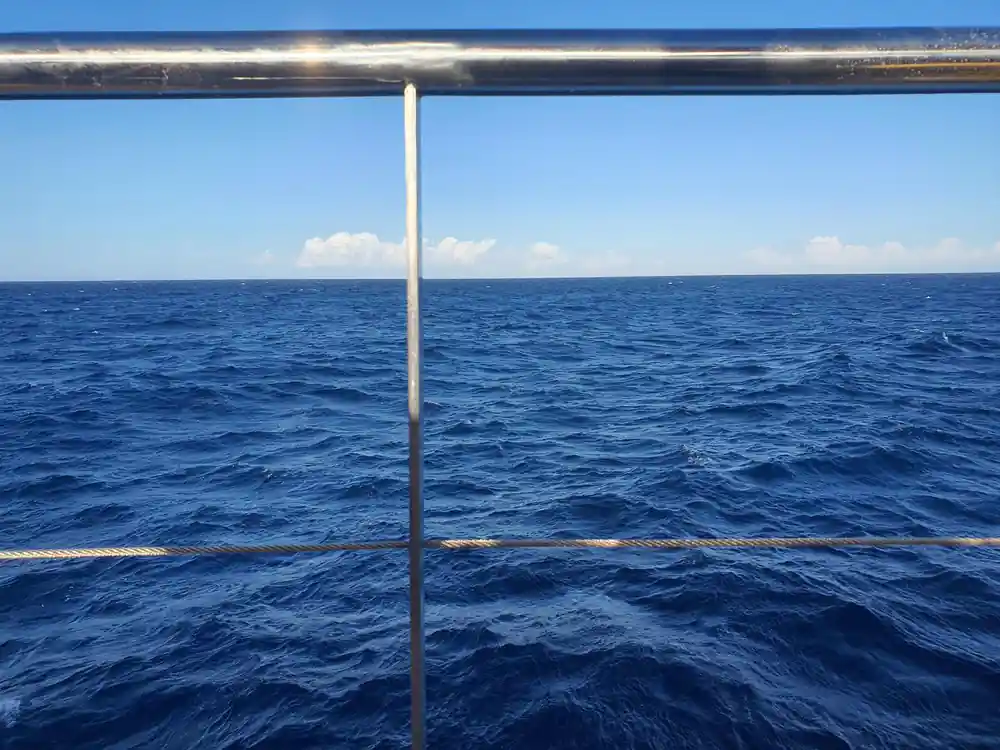
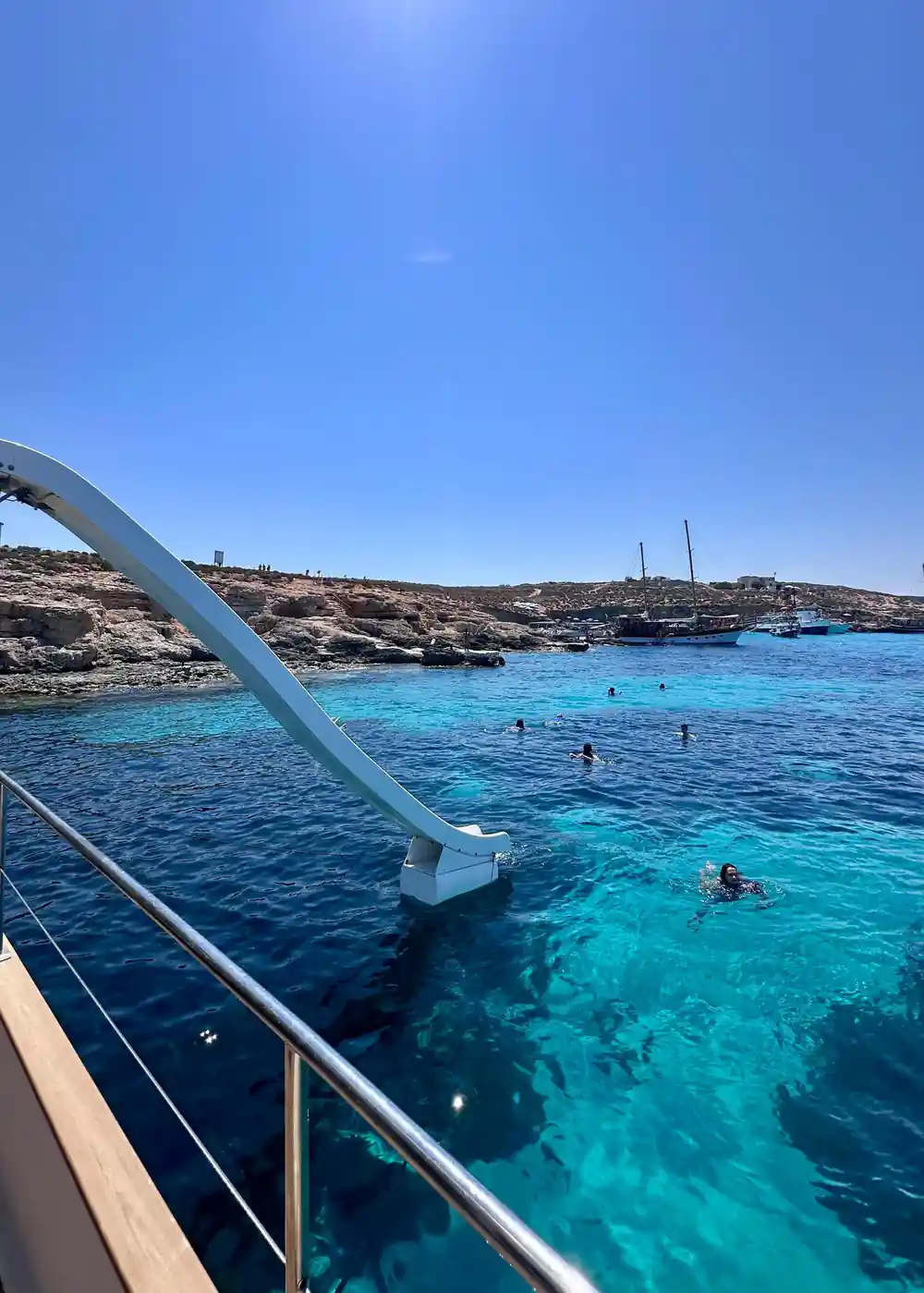
Deck nets, sun beds and turquoise water: the middle of a Blue Lagoon day.
Families, children and older travellers
Trip length is the first thing to weigh. The range is wide: a 1 hour private boat trip from US$17, a 3 - 4 hour small group boat tour from US$44, and a full 10 hour day that takes in Gozo as well as Comino, from US$35.[12][17][18]
Long crossings feel longer with small children and with grandparents. A shorter trip with shade on deck is easier to plan around naps, meals and the heat, while a full day between islands leaves little room for an early dinner in Valletta or Sliema. You do not have to swim to enjoy the lagoon: the colour of the water and the cliffs of Comino are the view, and the boat gives you a seat for it.
Ask the operator about the details that vary from boat to boat: whether children pay the same as adults, what size life jackets are carried, how the swim stop works, and whether there is a toilet and shade on board. Those answers matter more than the boat's top speed.
Step-free and wheelchair accessible boat trips
Several Comino and Blue Lagoon listings are marked wheelchair accessible. They include an 8 hour Gozo and Blue Lagoon cruise from US$40, a 7 hour Gozo and Blue Lagoon day trip from US$42, and a 7.5 hour Comino, Crystal Lagoon and Blue Lagoon cruise with lunch from US$58.[5][19][20]
Shorter step-free options sit alongside them: a 3 - 4 hour cruise around Comino from US$35, a 3.5 hour Blue Lagoon, Comino and Gozo boat cruise from US$23, and a 5 hour sunset cruise with a swim stop from US$40, which is limited to 10 participants.[6][13][21]
Access on a boat is not the same as access on a pavement. Gangways, tide and the width of a cabin door decide how the day goes. Ask how boarding works at the harbour you leave from, whether there is an accessible toilet on board, and whether you stay on the boat at the lagoon or step ashore onto Comino.
from US$63
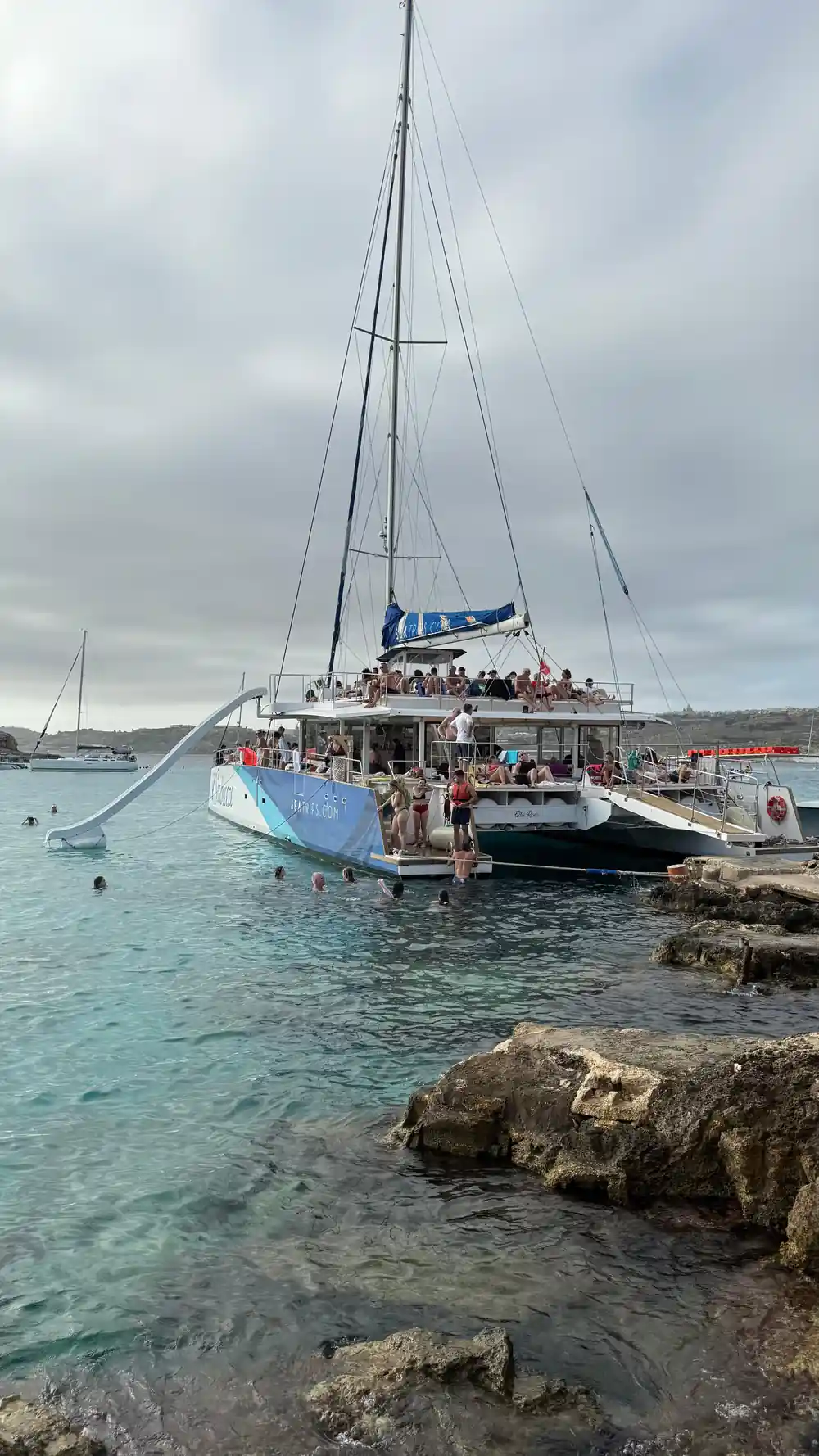
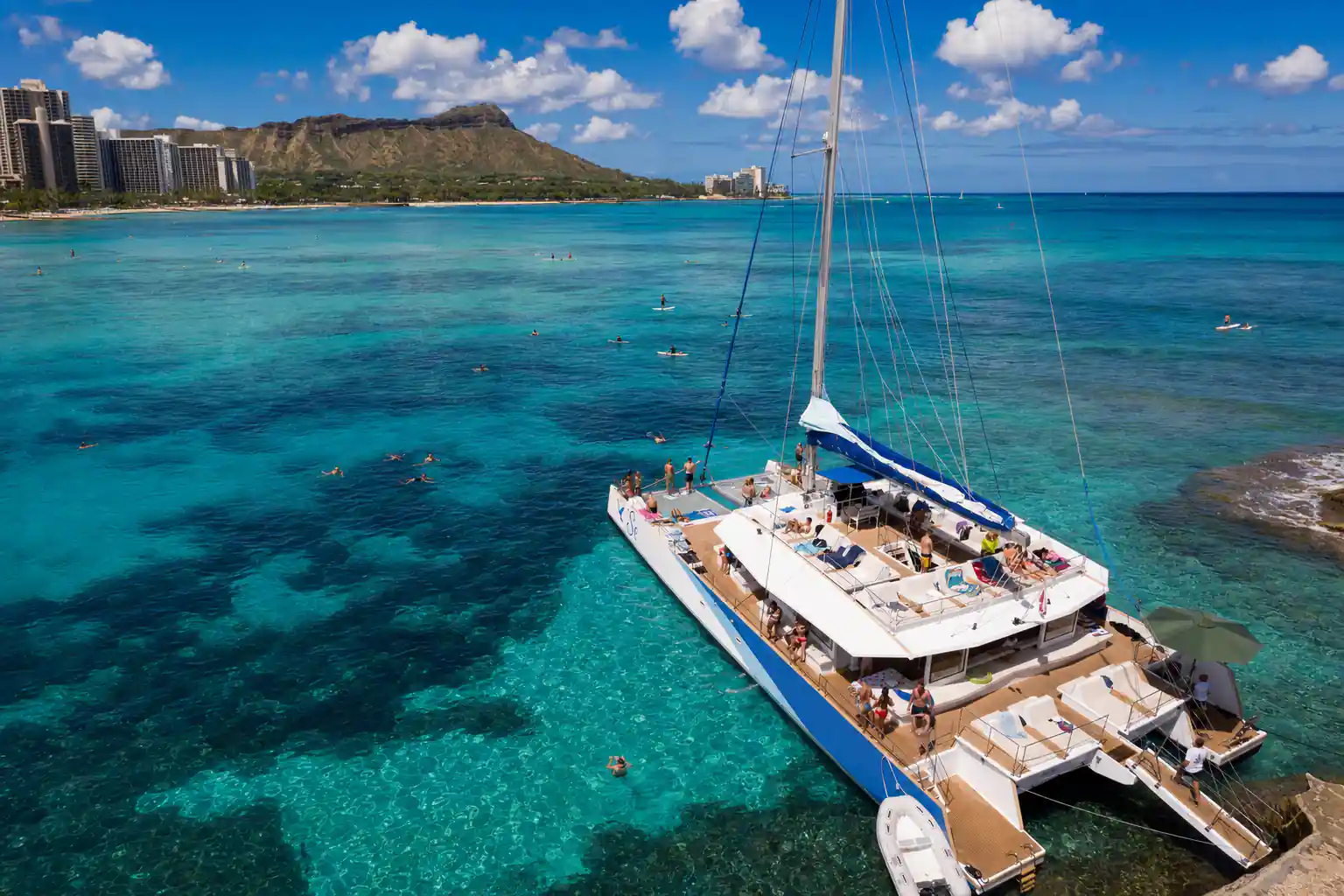
The Blue Lagoon, Beaches & Bays trip by catamaran is the boat booked from this site, a full day on the water with swim stops, deck space and shade.
Languages on board: guides and audio guides
The catamaran trip booked from this site has an English speaking host or greeter.[1] Other listings add an audio guide: the Comino, Blue Lagoon, Crystal Lagoon and sea caves tour covers English, French, German, Italian and Polish, and a Bugibba afternoon swim and sunset cruise covers English, Polish, Italian, French and German.[7][22]
Some boats run with a live guide only. A Sliema powerboat trip to the caves and the lagoon has a host or greeter who speaks English, French, Italian and Spanish, and a private boat trip to Comino and the Blue Lagoon has a guide who speaks English and Maltese.[23][24] Three productions, the 2002 film, the 2024 TV series and La Comtesse de Monte-Cristo, used locations on Comino.[25]
Decide what you want from the commentary before you book. If you want the sea caves, the watchtowers and the coastline explained as you pass, choose a trip with a live guide. If the day is mostly about swimming and lying on the nets, an audio guide in your own language is enough, and you can switch it off.
Swimming, non-swimmers and time in the water
The Blue Lagoon's sandy bottom reaches 14m at its deepest and reflects the light that gives the lagoon its turquoise colour from above.[26] That reflection is the whole trick of the place, and it is why the water glows brightest when the sun is high.
In peak summer, July and August, the Blue Lagoon receives between 2,500 and 3,500 visitors per day.[27] If you would rather swim away from the crowd, Crystal Lagoon lies a short distance from the Blue Lagoon and is described as lesser known and less crowded.[28] Divers head for the Santa Marija Caves, a popular dive site with at least 10 known caves.[29]
For anyone who does not swim, the boat is the day: shade, a rail to hold and the cliffs of Comino sliding past. Bring a mask even if you only float at the ladder, and let the crew know if you are staying on board. Comino itself is a Bird Sanctuary and forms part of the EU Natura 2000 network, and the island covers approximately 2.8 square kilometres.[30][31]
What to bring, and picking a quieter day
Pack for sun and for wind. A hat, high-factor sunscreen, sunglasses and a long-sleeved top for the ride home cover most days, and a dry bag keeps a phone alive between swim stops. Shoes you can kick off are easier on deck than anything with laces, and a light microfibre towel dries faster than a heavy one.
Malta gets more than 3,000 hours of sunshine per year.[32] Average sea temperature is 22°C in June, 26°C in July, 27°C in August, 26°C in September and 24°C in October.[8] July is the hottest month, with an average temperature of 27 C, and January is the coldest at 13 C.[33]
Evening departures are listed alongside the daytime trips, including a 5 hour evening catamaran cruise from US$63 and a 4 hour afternoon swim that ends with a sunset cruise, from US$35.[22][34] If you travel in peak summer, it is worth comparing an evening boat, a smaller vessel or a private charter before you decide. The water itself stays inviting from late spring into autumn.
Average sea temperature in Malta
Average sea temperature by month for Malta, as published on the Maltalingua climate page.[8]
From-prices for Blue Lagoon boat trips
From-prices in US dollars for single travellers.[1][7][10][12]
When to go: water temperature by season
Plan your Blue Lagoon day
Pick your boat
Shared cruise, small group boat or private charter. The catamaran trip here runs 5 - 6 hours from US$63.[1]
Check the group size
Small group trips are limited to numbers as low as 6 participants on some listings.[2]
Match the language
The catamaran trip has an English speaking host or greeter, and other cruises add audio guides.[1][7]
Plan around the crowds
In July and August the lagoon sees between 2,500 and 3,500 visitors a day, and evening cruises run too.[27][34]
Book, then pack light
Take a towel, a dry bag, sunscreen and a hat. Free cancellation up to 24 hours in advance for a full refund.[1]
Pick your boat, pick your date, get on the water
from US$64Reserve now & pay later