At a glance
- A 5 - 6 hour catamaran day, built around anchoring and swimming in the bays rather than rushing between stops.[1]
- A short distance from the Blue Lagoon, the lesser-known and less crowded lagoon tucked under the cliffs of Comino.[2]
- The sandy bottom reaches 14m at its deepest and reflects light, which gives the water its turquoise colour from above.[3]
- In peak summer, July and August, the Blue Lagoon receives between 2,500 and 3,500 visitors per day.[4]
- Average sea temperature for Malta runs from 19°C in May to 27°C in August and back to 24°C in October.[5]
- Top choice Blue Lagoon by catamaran from US$63 Duration5 - 6 hours[1]Rating4.68 from 6,838 reviews[1]CancellationCancel up to 24 hours ahead[1] Check availability
- Blue Lagoon & caves from US$35 Duration6 hours[6]Rating4.65 from 7,387 reviews[6]CancellationCancel up to 24 hours ahead[6] See this tour
- Snorkel, slide & swim from US$35 Duration4 - 7 hours[7]Rating4.74 from 3,374 reviews[7]CancellationCancel up to 24 hours ahead[7] See this tour
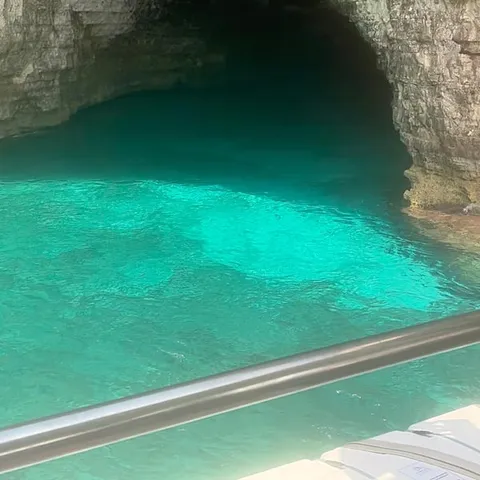
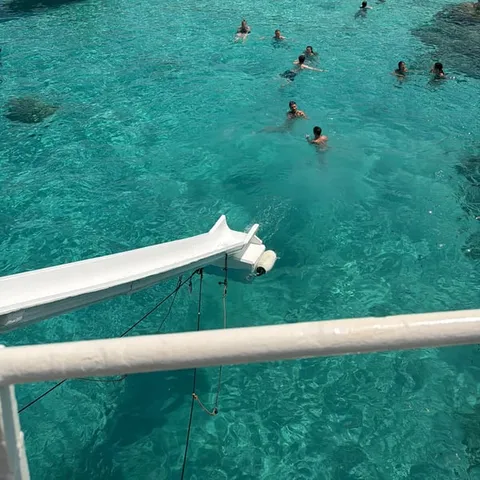
Just a stone’s throw away from the renowned Blue Lagoon lies a lesser-known and less crowded lagoon, the Crystal Lagoon!
Which bays are worth your day
Getting ready
Out on the water
The bays this trip is built around
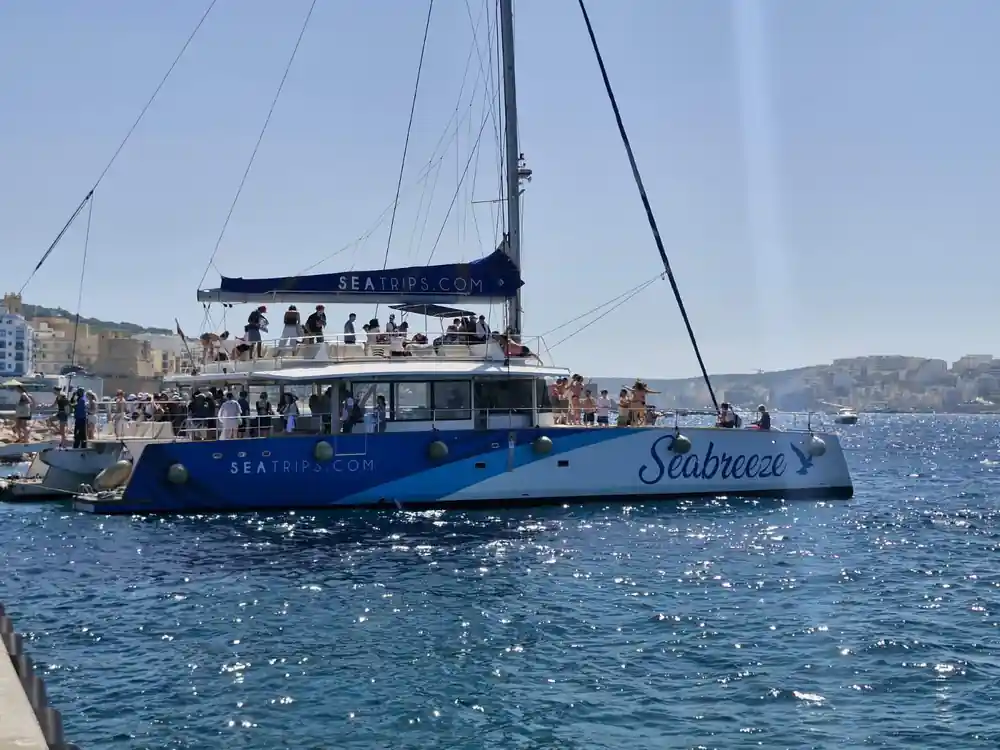
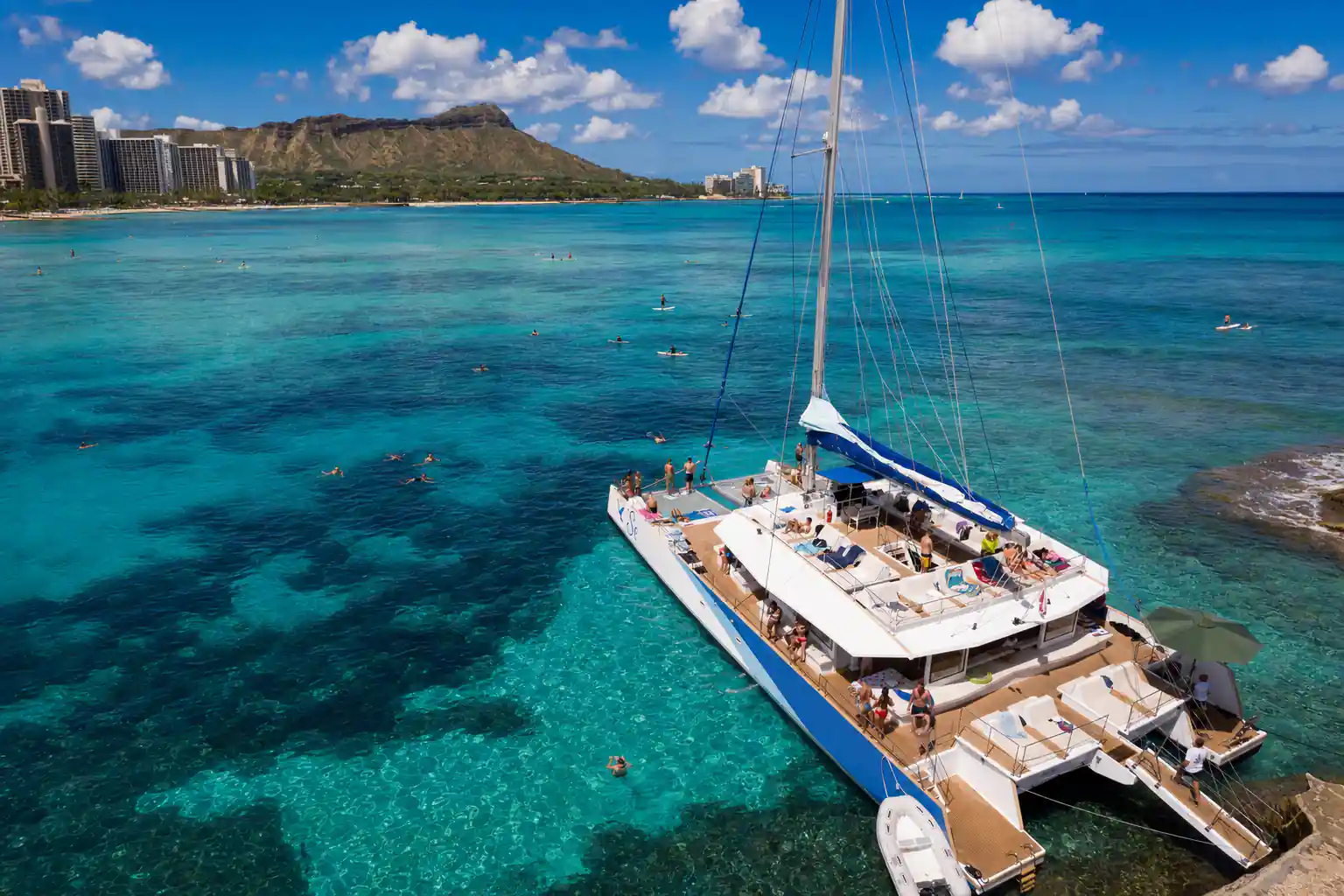
The trip booked from this site is the Malta: Blue Lagoon, Beaches & Bays Trip by Catamaran. It runs for 5 - 6 hours[1], and the shape of the day is simple: the boat moves, the anchor goes down, and everyone swims. There is a host or greeter on board who speaks English[1], and the listing is rated 4.68 from 6,838 reviews on GetYourGuide[1]. You can reserve now and pay later, and free cancellation covers you up to 24 hours in advance for a full refund.[1]
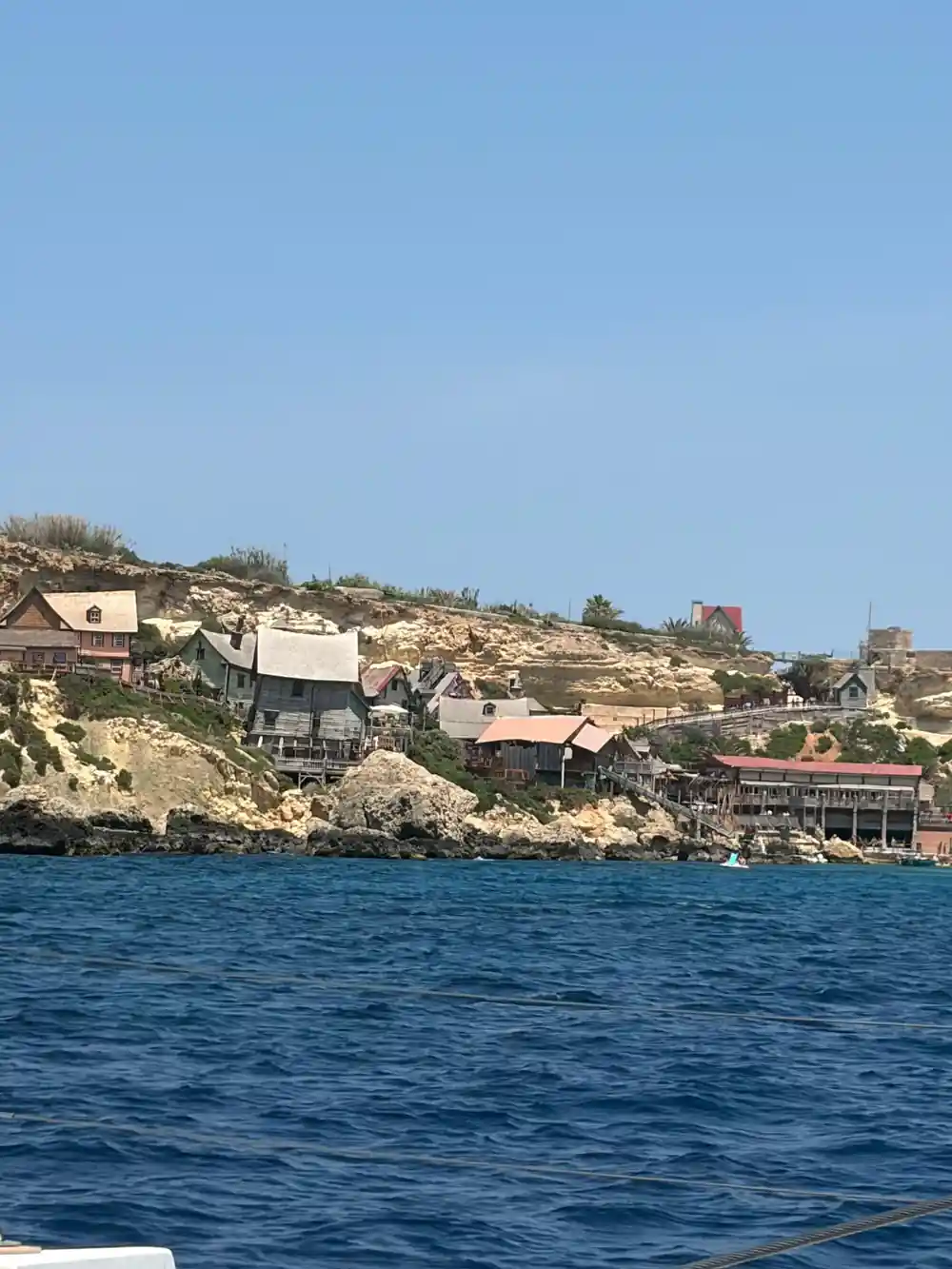
The island at the centre of the day is Comino, approximately 2.8 square kilometres of limestone, low scrub and cliff.[10] Two of its bays do most of the work. The Blue Lagoon sits on one side, shallow and bright. The Crystal Lagoon lies a short distance away, tucked under the cliffs, and it is a lesser-known and less crowded lagoon than its famous neighbour.[2] Everything else on the route is coastline seen from the water: caves and coves, a watchtower on a ridge, and the long low shapes of Malta and Gozo on either side.
Crystal Lagoon, the quieter twin
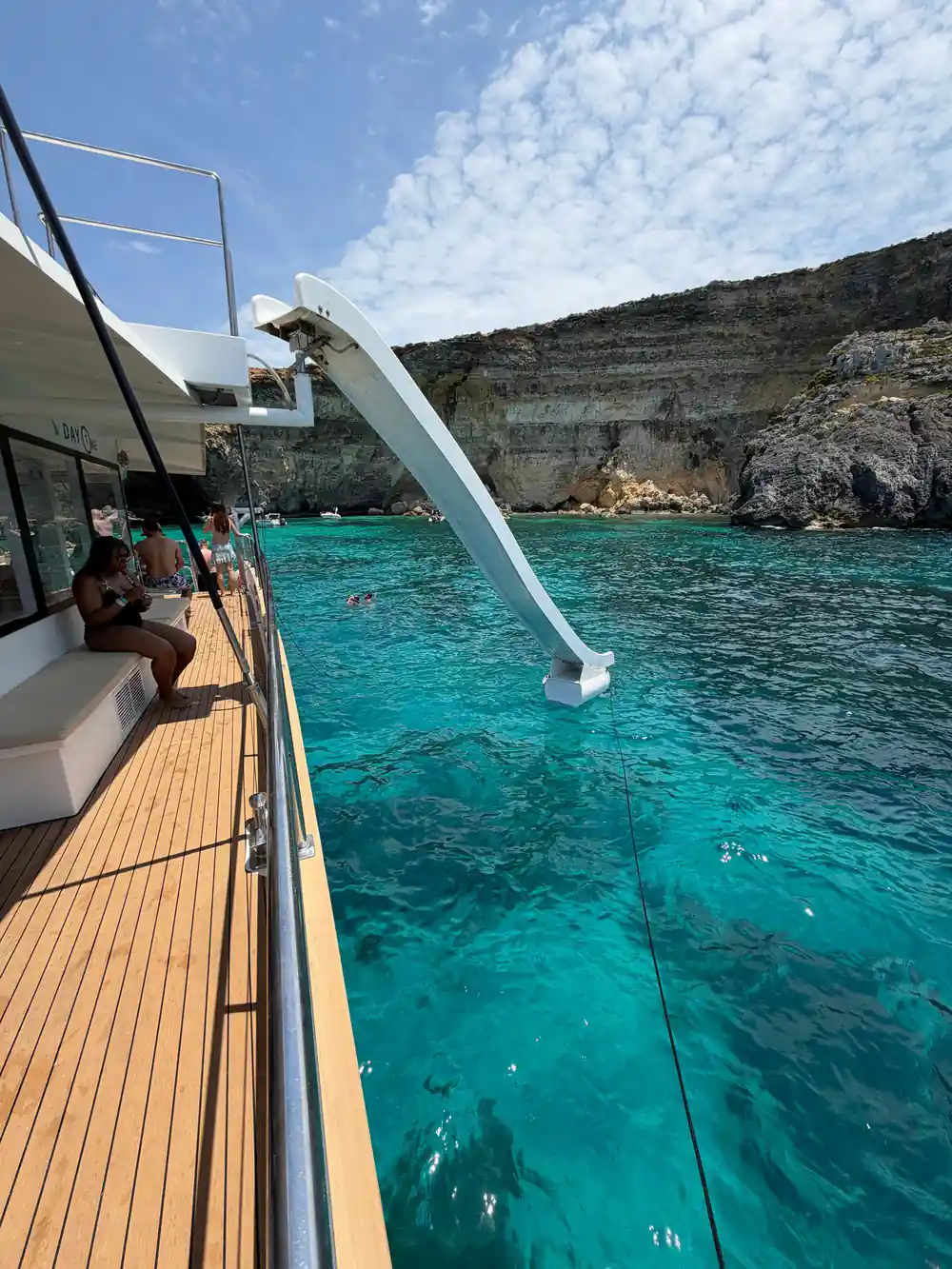
If you have seen one photograph of a Maltese lagoon, it was probably the Blue Lagoon. The Crystal Lagoon is the other one, and it behaves differently. It lies a short distance from the Blue Lagoon and is described as lesser-known and less crowded.[2] It is also more enclosed, with taller rock walls and deeper water close in, so the swimming is more about moving along the edge of the cliffs than wading out over a sand shelf.
That difference is worth knowing before you choose where to get in. At the Blue Lagoon you step off into pale, shallow water with the island's bare terraces behind you. At the Crystal Lagoon you get shade, greener water and rocks to explore. Boats that visit one often call at the other on the same run, since the two are close and the shelter works differently when the wind is up. If your itinerary names both, swim in each and decide which one you would come back for.
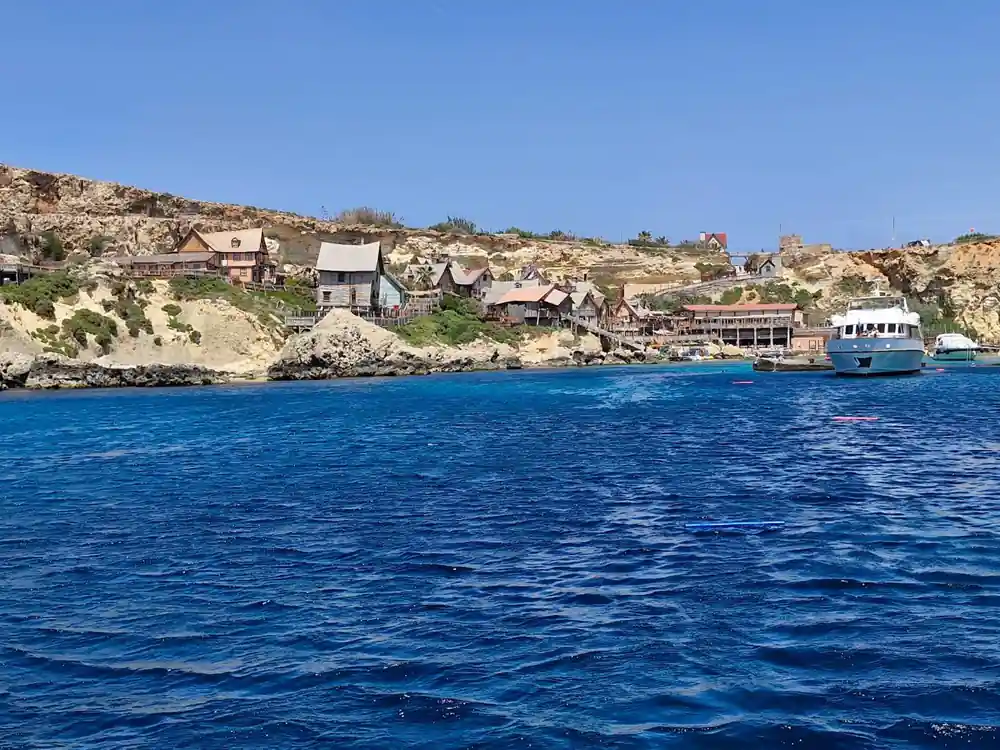
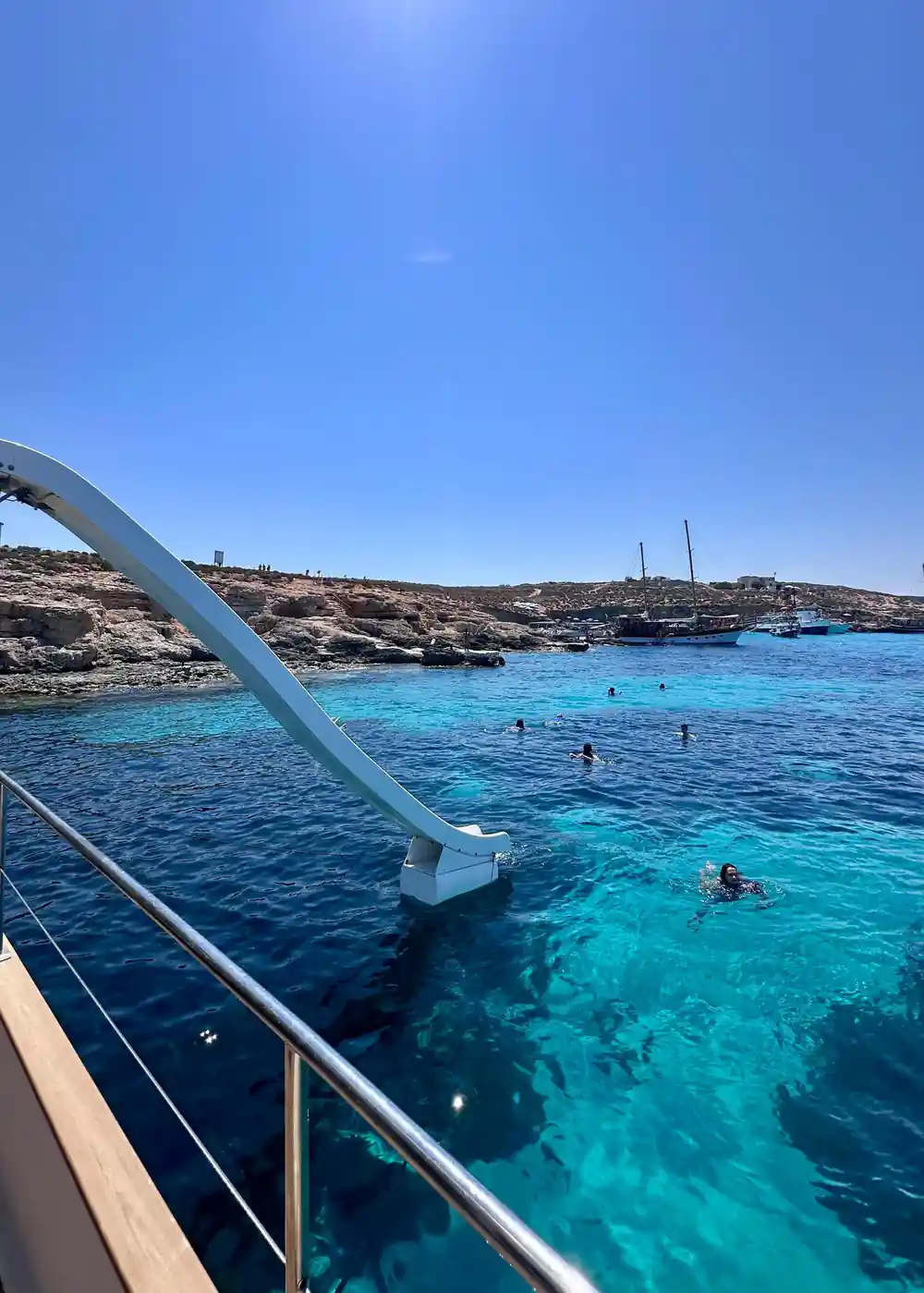
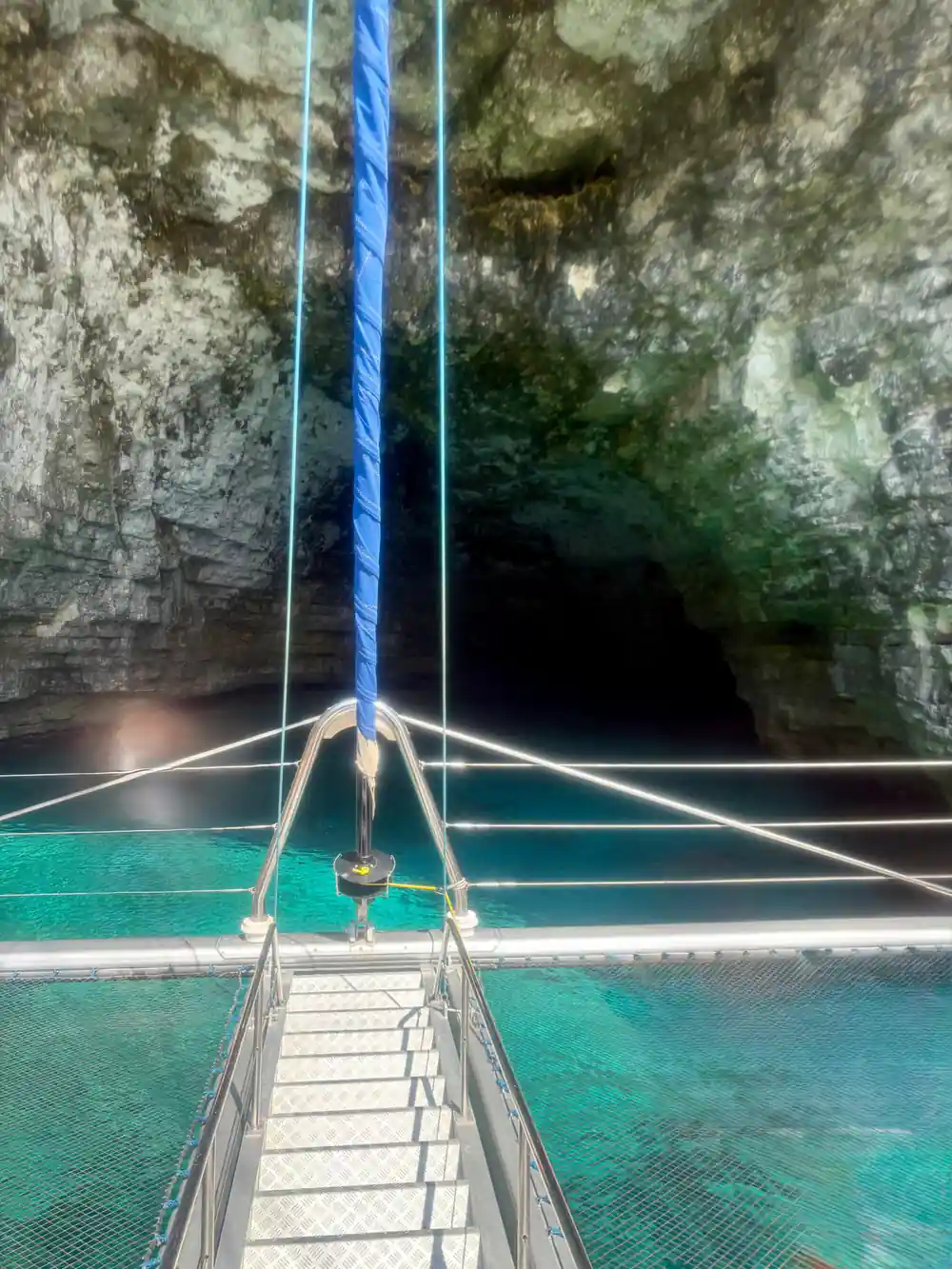
The Blue Lagoon from the deck, with the sandy bottom glowing through the water.
The Blue Lagoon, and why the water glows
The colour is geology rather than a filter. The sandy bottom reaches 14m at its deepest and reflects light, which is what gives the lagoon its iconic turquoise colour from above.[3] What that means in practice is that you can see the seabed a long way out, the water shifts from pale green to deeper blue as you swim, and photographs taken from the deck come out looking like the postcards. The sand is fine and pale, the shelf is long, and the far edge of the bay drops away into open water.
It is also the busiest water in the islands. In peak summer, July and August, the Blue Lagoon receives between 2,500 and 3,500 visitors per day.[4] If you want room to swim, take the earliest departure you can book, or travel in the shoulder months when the same water is far emptier. The sea itself stays kind: warm enough for a long swim well into autumn, and cold enough in winter that most people stay on the deck.
The northern bays on the way out
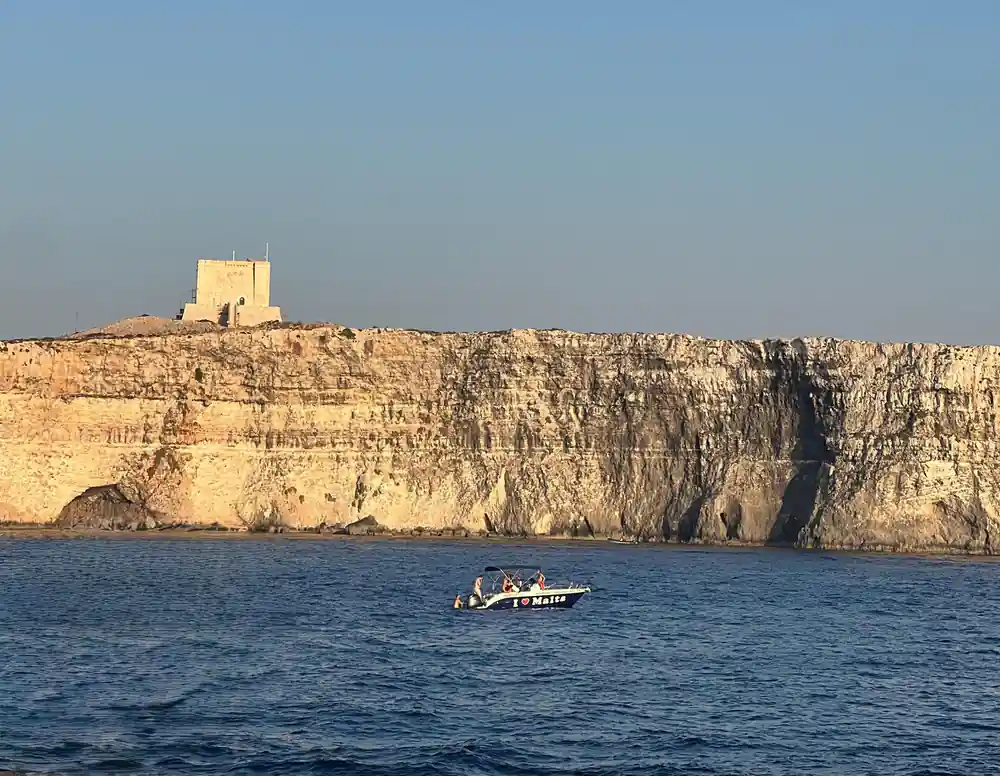
Malta's north coast is a run of shallow bays and low cliffs, and it is the part of the island most visitors only ever see from a bus window. From the water the bays open one after another: St Paul's Bay and its small islands, Mellieha Bay with its long sandy curve, and the inlets where the coastline turns towards Comino. Landmarks stack up as you go. Santa Marija Tower on Comino was built in 1618 by Grand Master Alof de Wignacourt[11], and it stands on the skyline well before the lagoon itself comes into view.
The light is the reason this coast photographs so well. Malta gets more than 3,000 hours of sunshine per year[8], and on a clear day the limestone reads almost white against the blue. Malta also welcomed 3.56 million visitors in 2024, a record-breaking year for tourism[12], which is worth remembering when you choose a date. Outside the busiest weeks the same bays feel far more spacious, and the anchorages have room in them.
from US$63
The Malta: Blue Lagoon, Beaches & Bays Trip by Catamaran runs for 5 - 6 hours and is rated 4.68 from 6,838 reviews.[1]
Seeing a coast from the water
The caves and cliffs are the main event on the way around Comino. The Santa Marija Caves are a popular dive site with at least 10 known caves that divers can explore[13], and boats nose in close enough to see the dark entries and the banding in the rock. Comino has done duty as a film set too: the 2002 film, the 2024 TV series and La Comtesse de Monte-Cristo used locations on Comino.[14]
What changes at sea level is scale. Roads compress these islands into short hops; from the water you take in the whole north face of Comino in one sweep, with the cliffs above the Crystal Lagoon on one side and the open channel on the other. The air coming off a cave mouth is noticeably cooler than the air on deck, which is its own small pleasure on a hot afternoon. Bring something to keep a phone dry and keep an eye on where the boat is drifting.
Not going ashore, and why that is fine
This is a day on the water rather than a walking tour, and the island suits that. Comino is a Bird Sanctuary, part of the EU Natura 2000 network and designated a Special Protection Area under the Birds Directive[9], so it is protected and mostly bare rock and scrub. The reward for staying on board is more swimming time, more shade, and no queue for a jetty.
The format works well for families and for anyone who would rather be in the water than on a coach. You swim, dry off, eat something, swim again, and watch the coast slide past between stops. The catamaran runs for 5 - 6 hours[1], long enough for several anchorages and short enough to leave your evening free. Nothing about the day depends on setting foot on Comino at all.
Which bay suits which day
For most people the sea temperature decides whether a swim is a pleasure or a quick dip. Average sea temperatures for Malta are 19°C in May, 22°C in June, 26°C in July, 27°C in August, 26°C in September and 24°C in October.[5] Air temperature follows a similar curve: July is the hottest month with an average of 27 C, and January is the coldest at 13 C.[15]
So: for the classic Blue Lagoon swim, book late spring to early autumn and take the earliest slot you can. For quiet water under cliffs, ask about the Crystal Lagoon, a short distance from the Blue Lagoon and a lesser-known and less crowded lagoon.[2] If caves and the open coast matter more to you than a single bay, look at the longer cruises that loop right around Comino. Whichever you choose, the water is the whole point: shallow, clear and warm enough to keep you in it far longer than you planned.
Average sea temperature by month
Average monthly sea temperatures for Malta as published by Maltalingua.[5]
Blue Lagoon boat trips and their from-prices
US dollar from-prices for the GetYourGuide listings named here.[1][6][7][16]
When to be on the water
Plan your day on the water
Pick your date
July and August are the busiest weeks, with between 2,500 and 3,500 visitors a day at the Blue Lagoon.[4]
Book the catamaran
This trip starts from US$63 and runs for 5 - 6 hours.[1]
Take the early slot
Check availability for starting times, then choose the earliest departure you can manage.
Pack for water
Swimsuit worn under clothes, a towel, a dry bag for the phone, and a light layer for the ride back.
Swim first
Get in the water early in each stop, then eat and dry off while the boat moves to the next bay.
Check the catamaran day and the bays it reaches
from US$64Reserve now & pay later