At a glance
- The catamaran trip runs 5 - 6 hours, is priced from US$63, and is rated 4.68 from 6,838 reviews.[1]
- You swim from the boat into open water, so floating and treading water matter more than speed.
- Average sea temperature peaks at 27°C in August and sits at 22°C in June, so summer swims need no wetsuit.[2]
- In July and August the Blue Lagoon receives between 2,500 and 3,500 visitors per day.[3]
- Free cancellation applies up to 24 hours in advance, and you can reserve now and pay later on the catamaran trip.[1]
- Top choice Blue Lagoon catamaran trip from US$63 Duration5 - 6 hours[1]Rating4.68 from 6,838 reviews[1]GuideHost or greeter: English[1]CancellationFree cancellation up to 24 hours[1] Check availability
- Blue Lagoon and sea caves from US$35 Duration6 hours[4]Rating4.65 from 7,387 reviews[4]GuideHost or greeter: English[4]CancellationFree cancellation up to 24 hours[4] See this tour
- Snorkel and slide cruise from US$35 Duration4 - 7 hours[5]Rating4.74 from 3,374 reviews[5]GuideLive tour guide: English[5]CancellationFree cancellation up to 24 hours[5] See this tour
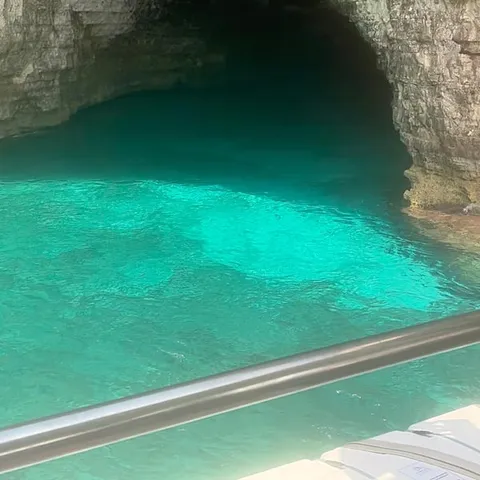
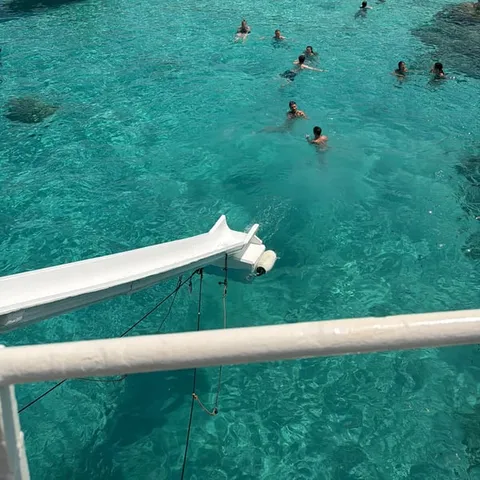
The sandy bottom reaches 14m at its deepest and reflects the light that gives the lagoon its iconic turquoise colour from above.
Swimming off the boat: the verdict
Before you step on board
- Keep the booking reference on your phone, with a screenshot as backup
- Sunscreen, a hat that ties on and a rash vest for long spells in the sun
- A mask that fits your face, tested well before the trip
- From US$63 per person on the catamaran trip[1]
Swimming from a catamaran is a different thing
The Malta: Blue Lagoon, Beaches & Bays Trip by Catamaran runs for 5 - 6 hours, has an English speaking host, and starts from US$63.[1] What makes it different from a beach day is the water itself. The boat anchors over sand or rock, the engines stop, and the sea around you is deep, clear and open on every side. You step off a platform into it instead of wading in from a shore, and when you lift your head, the catamaran is what you swim back to.
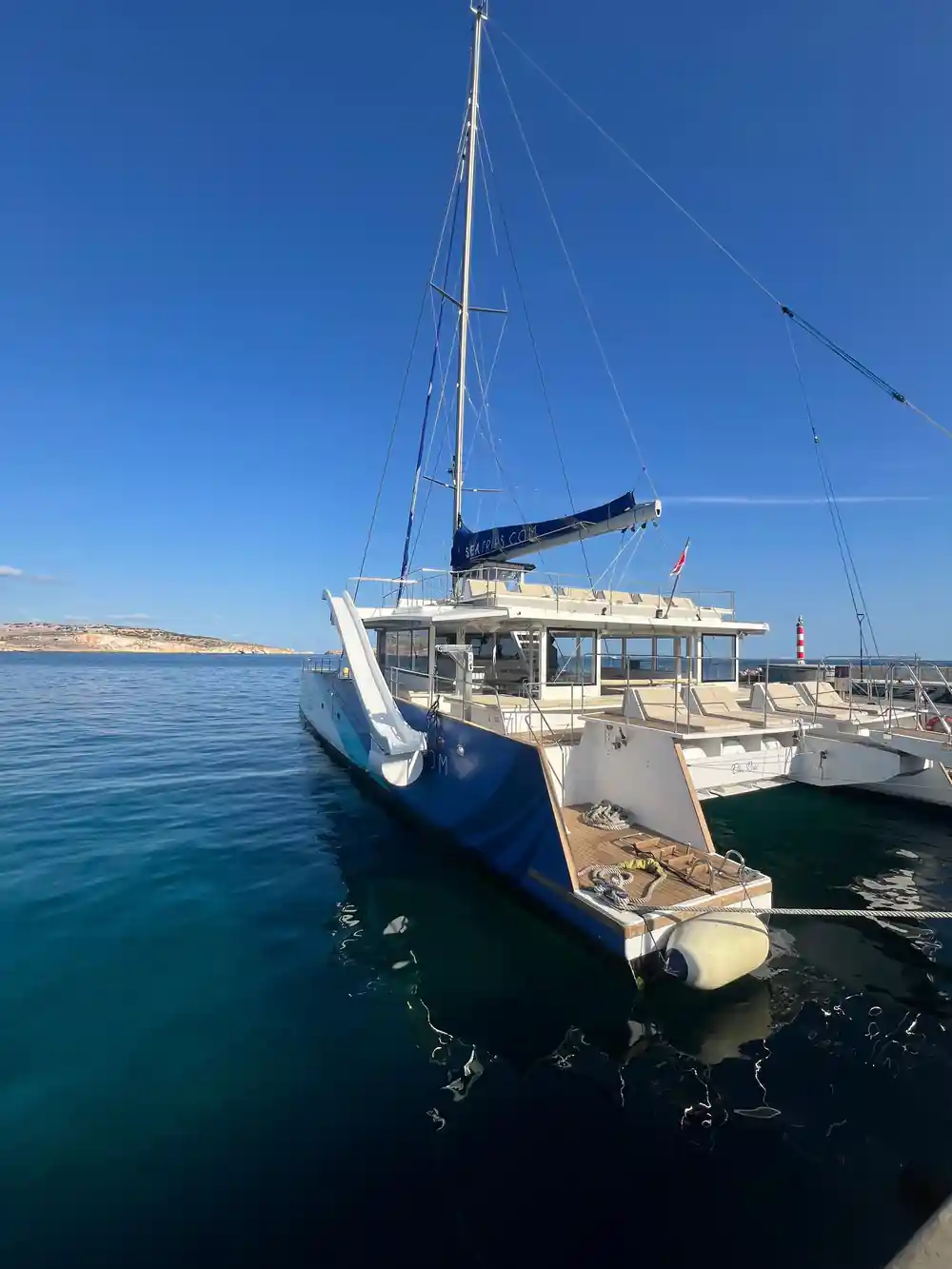
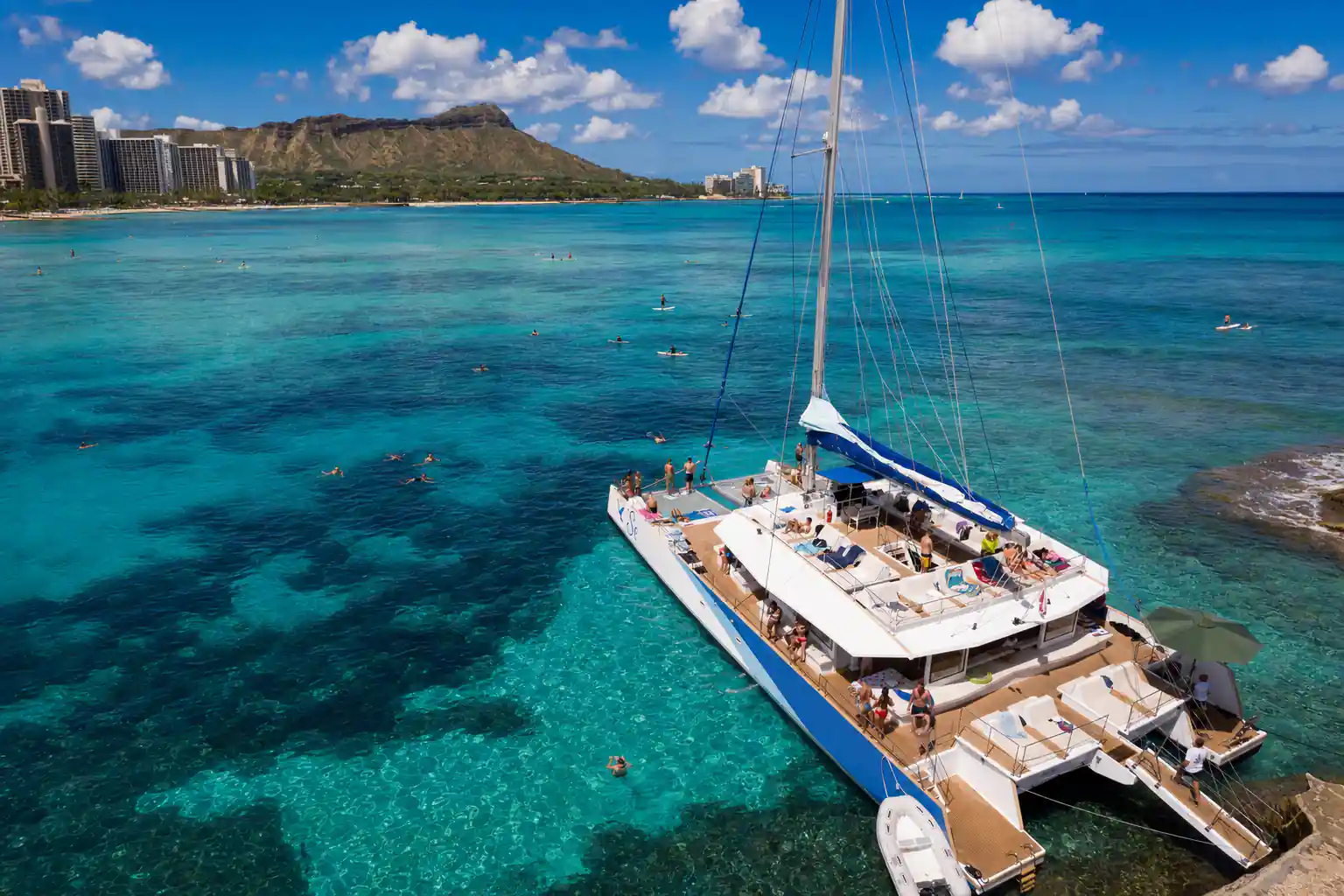
Photos from the trip show people stretched out on the trampoline netting at the bow, sun beds along the deck, and swimmers diving off a rock into clear water. That is the rhythm of the day: long spells of sitting in the sun, then a splash. You can stay dry with a book and still enjoy it, or you can be in and out of the water every time the boat stops. The swim is the centre of the outing, but the boat is the place you come back to for shade, a towel and a cold drink.
How comfortable a swimmer you need to be
You do not need to be a strong swimmer, but you do need to be happy in water that is over your head. There is no shallow end at a boat swim stop and no sand under your feet, so the moment you leave the ladder you are floating. If you can swim a short distance, tread water and float on your back, you have everything the stop asks of you. If those things feel shaky, a beach day is a kinder place to build confidence.
A catamaran suits nervous swimmers. The platform sits low, the hull is wide, and the ladder stays within sight. Set yourself a simple rule: swim out for a minute, turn around and look at the boat, then decide whether to go further. A float belt or a small inflatable can make the difference between watching from the deck and joining in, and your own gear is worth packing if you are unsure. If the water is choppy, stay close to the boat and keep to the calmer side.
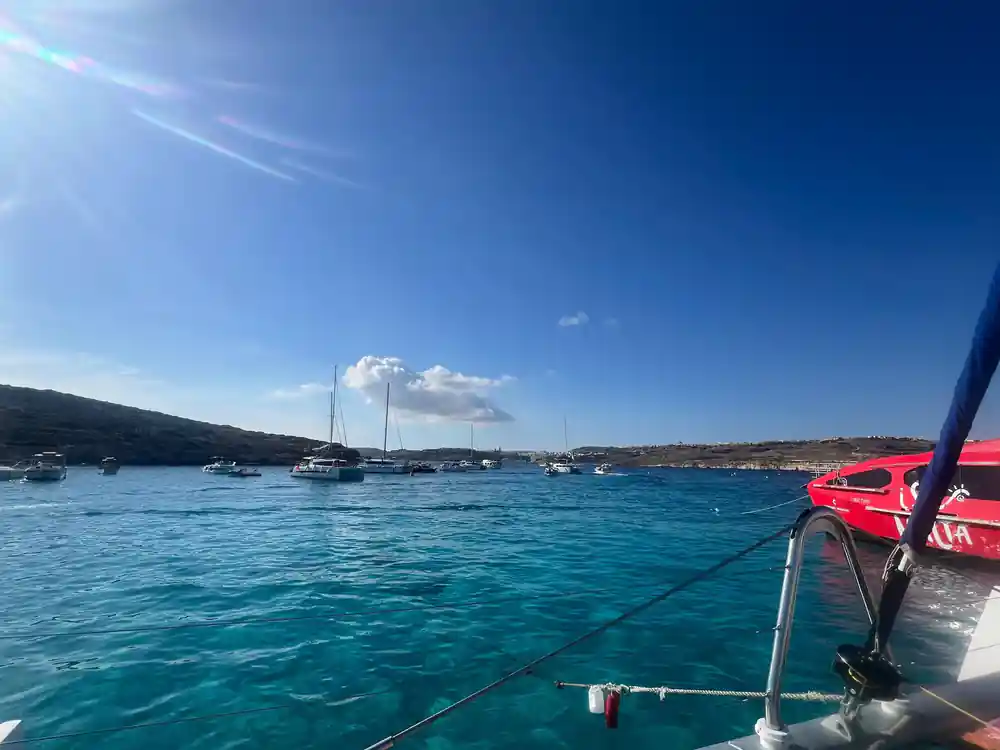
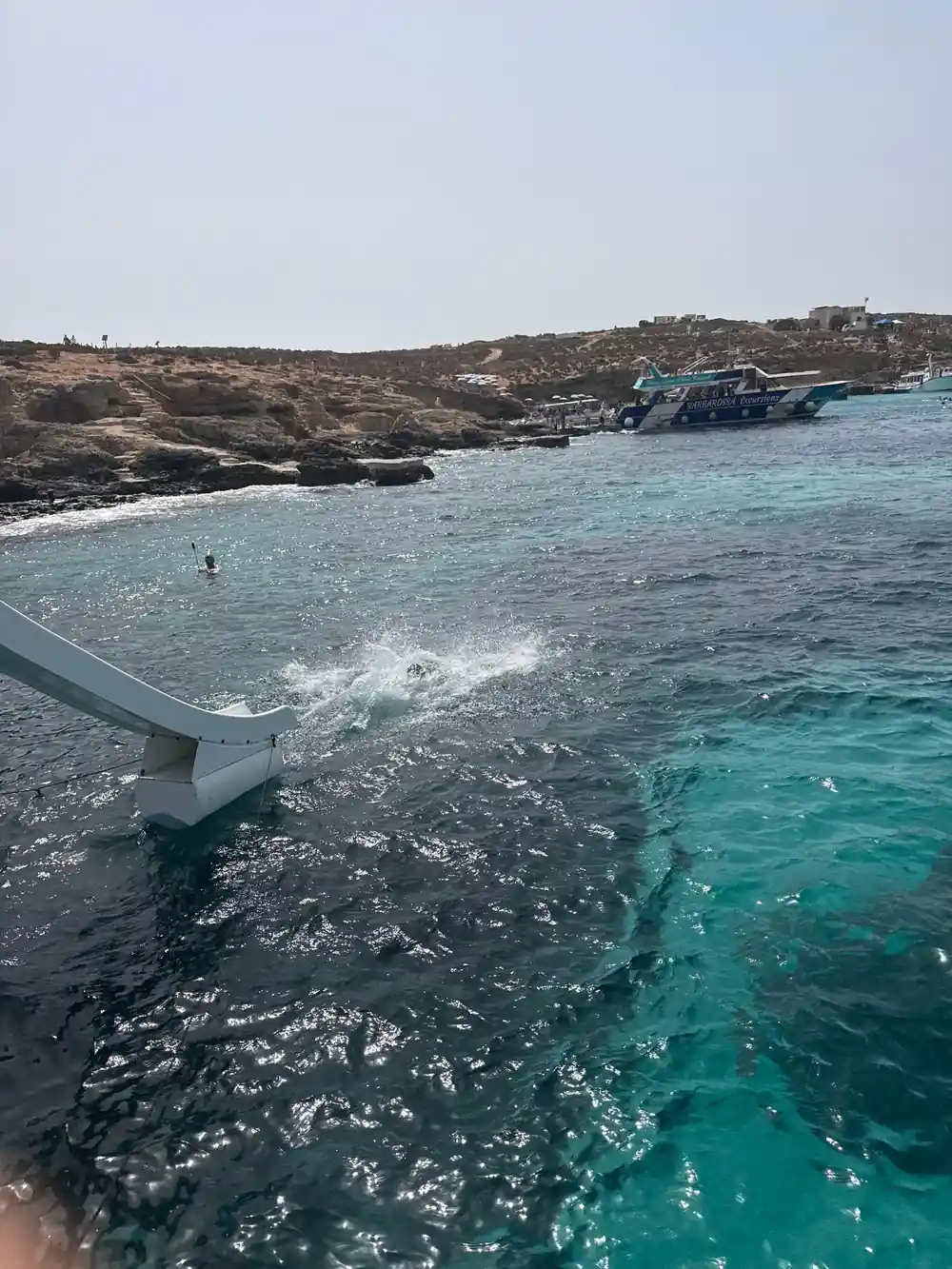
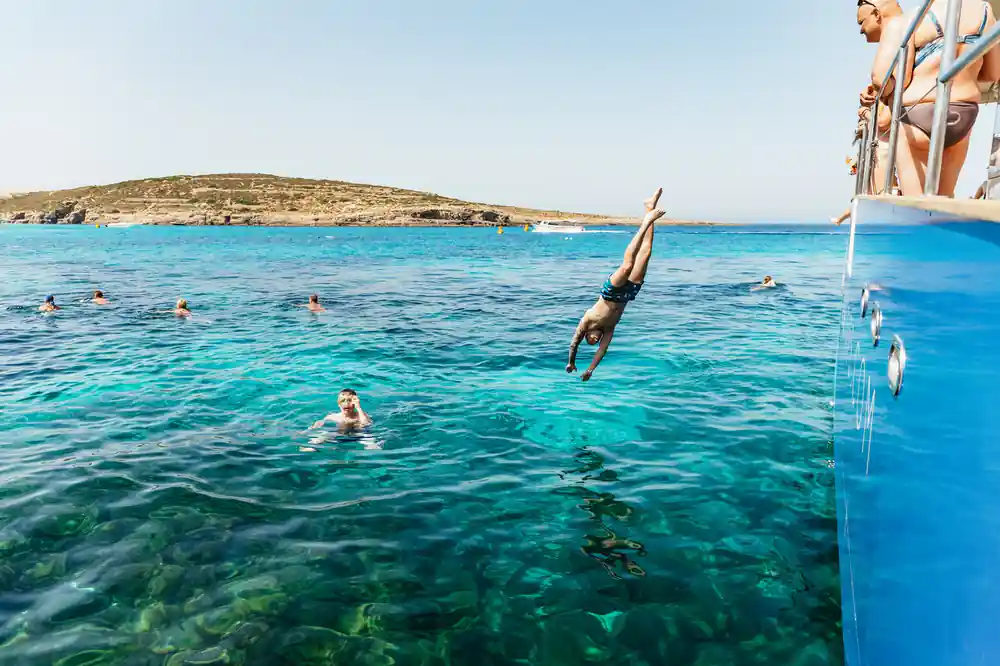
Swimmers in clear water off Comino's rocky shore, with the catamaran anchored close by.
The ladders, and why they matter
Getting back on board is the part that catches people out. A boat ladder is not a pool ladder: it is short, steep and fixed to something that rises and falls with the swell. You climb it with wet hands and tired arms while the hull moves beside you. The trick is to arrive at the ladder with something left in your legs, take hold with both hands, and wait for the boat to come down to you rather than chasing a rung upward.
Note where the ladder is when you get in, and check it again every few minutes; from water level the boat looks different and the ladder can seem to be on the far side. Take fins off before you climb and pass them up if a hand is free. Keep your mask on your face or around your neck so both hands are available for the rungs. If someone is already on the ladder, float clear and let them finish.
What you can see under the surface
The Blue Lagoon's sandy bottom reaches 14m at its deepest and reflects the light that gives the lagoon its iconic turquoise colour from above.[6] From the surface you watch that pale sand slide away beneath you, then patches of seagrass, then darker rock where the lagoon opens towards the sea. The colour shifts through the day, brightest around midday and softer in the late afternoon. Keep your mask clear and look down as you swim, not only ahead.
The Santa Marija Caves are a popular dive site with at least 10 known caves that divers can explore.[7] The same limestone shows up along the Comino coast as arches, cracks and shadowed overhangs that a snorkeller can enjoy from the surface. Small fish gather around the rocks and the seagrass, and the light on the sand is often the best thing you will see all day.
A short distance from the famous Blue Lagoon lies Crystal Lagoon, described as lesser known and less crowded.[8] Comino itself is small, approximately 2.8 square kilometres of rock, low scrub and coastline[9], and it holds Bird Sanctuary status as part of the EU Natura 2000 network, designated a Special Protection Area under the Birds Directive.[10]
from US$63
The Malta: Blue Lagoon, Beaches & Bays Trip by Catamaran is listed at 5 - 6 hours with an English speaking host.[1]
Gear, and what to bring
Start with a mask that fits your face. Try it at home first; a leaking mask ends a swim early. A snorkel is useful and fins are optional, best kept for open water rather than the busy area around the ladder. A thin rash vest adds warmth and sun cover without bulk, and a dry bag keeps a phone, keys and a towel dry on a wet deck.
Malta gets more than 3,000 hours of sunshine per year[11], so pack sunscreen, a hat that ties on, and sunglasses you can keep hold of. Reef safe sunscreen is worth the extra cost if you plan to snorkel. Bring a towel, a warm layer for the ride back, and something to drink. Water shoes help on rocky ground, and a waterproof phone pouch saves you from leaving the phone in a bag on deck.
How long you actually get
The listed duration for the catamaran trip is 5 - 6 hours[1], and that covers the whole outing: boarding, the cruise along the coast, the swim stops, and the run back. How long each swim lasts depends on the day, the weather and how busy the anchorages are. Being ready to get in when the boat settles saves you minutes, and the same goes for being ready to come out.
In peak summer, July and August, the Blue Lagoon receives between 2,500 and 3,500 visitors per day.[3] Timing your swim for the quieter moments helps: go in early in the stop, or wait on deck while the first rush passes. Swimming a little wider of the boat usually gives you clearer water and more space. Comino is small, approximately 2.8 square kilometres[9], and the lagoon is one bay on its coastline.
The island has appeared on screen as well: a 2002 film, a 2024 TV series and La Comtesse de Monte-Cristo all used locations on Comino.[12] If you only have one good swim in you, use it early, while you are still warm and full of energy, and leave the last part of the stop for drying off in the sun.
Water temperatures through the year
Average sea temperatures around Malta are listed as 17°C in January, 16°C in February and March, 17°C in April, 19°C in May, 22°C in June, 26°C in July, 27°C in August, 26°C in September, 24°C in October, 22°C in November and 19°C in December.[2] That is a long, gently warming curve, and it shapes how long you will want to stay in the water.
Air temperatures follow a similar shape: July is the hottest month with an average of 27 C, and January is the coldest at 13 C.[13] August has the most daily sunshine hours, 12 of them.[13] In January the average sea temperature is 17°C, which suits a short, brisk dip rather than a long float.[2] The warm months run from June to October, when the water sits between 22°C and 27°C.[2]
A thin neoprene top or a rash vest makes a surprising difference either side of summer, and a swim cap keeps your head warm if you feel the cold. Malta gets more than 3,000 hours of sunshine per year, so the deck is usually a pleasant place to warm up afterwards.[11] Drink water, eat something, and give yourself a few minutes in the shade before you go back in.
Average sea temperature by month, May to October
Average monthly sea temperatures for Malta as published by Maltalingua.[2]
From-prices for Blue Lagoon boat trips
When to book a swim stop
A swim stop, step by step
Watch the briefing
Listen for where the ladder is, which side to swim on, and when the boat is due to move again.
Get ready first
Mask on, fins on, sunscreen reapplied, phone in a dry bag. A rocking deck is a bad place to hunt for things.
Sit and slide in
Sit on the platform, check what is behind you, slide in and float clear of the hull before you put your face down.
Swim out and look back
Swim a short distance, then turn around and check where the boat is. Distances look shorter from the water.
Come back with energy left
Take fins off at the ladder, hand them up, and wait for the boat to drop towards you before you step across.
Rinse, dry, warm up
Fresh water rinse, towel, something warm for the ride home. Sun and salt water are more tiring than they feel.
Swim off the catamaran at Comino and the Blue Lagoon
from US$64Reserve now & pay later