At a glance
- The wooden village above Anchor Bay was built for a musical film and left standing; it is the landmark the north coast is known for.
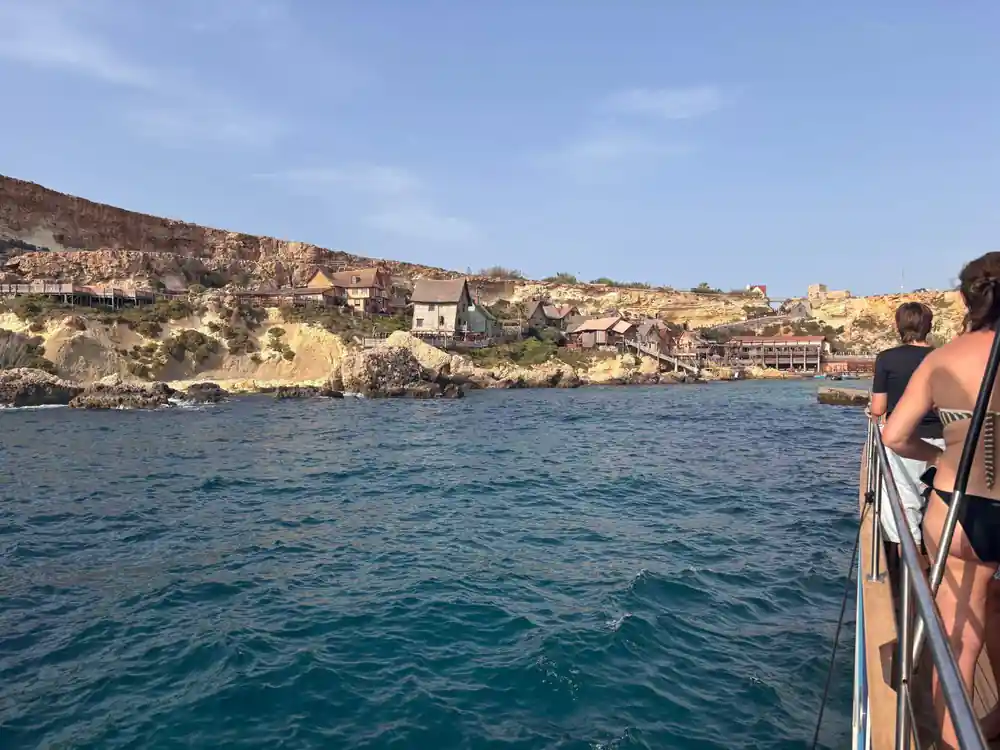
- From a boat the village reads as a row of roofs on a low cliff, with the bay opening and closing around it as you pass.
- A small pebble and rock cove with shallow edges, clear water and little shade until late afternoon; reef shoes help on the entry.
- North coast trips pass this stretch on the way to Comino, so the village on its headland comes to you from the deck.
- The catamaran day from Bugibba runs 5 - 6 hours, is listed from US$63 and can be cancelled free up to 24 hours ahead.[1]
- Top choice Blue Lagoon catamaran from US$63 Duration5 - 6 hours[1]Rating4.68[1]Reviews6,838 reviews[1]GuideHost or greeter in English[1]CancellationFree up to 24 hours before[1] Check availability
- Snorkel and slide cruise from US$35 Duration4 - 7 hours[2]Rating4.74[2]Reviews3,374 reviews[2]GuideLive tour guide in English[2]CancellationFree up to 24 hours before[2] See this tour
- Blue Lagoon and sea caves from US$35 Duration6 hours[3]Rating4.65[3]Reviews7,387 reviews[3]GuideHost or greeter in English[3]CancellationFree up to 24 hours before[3] See this tour
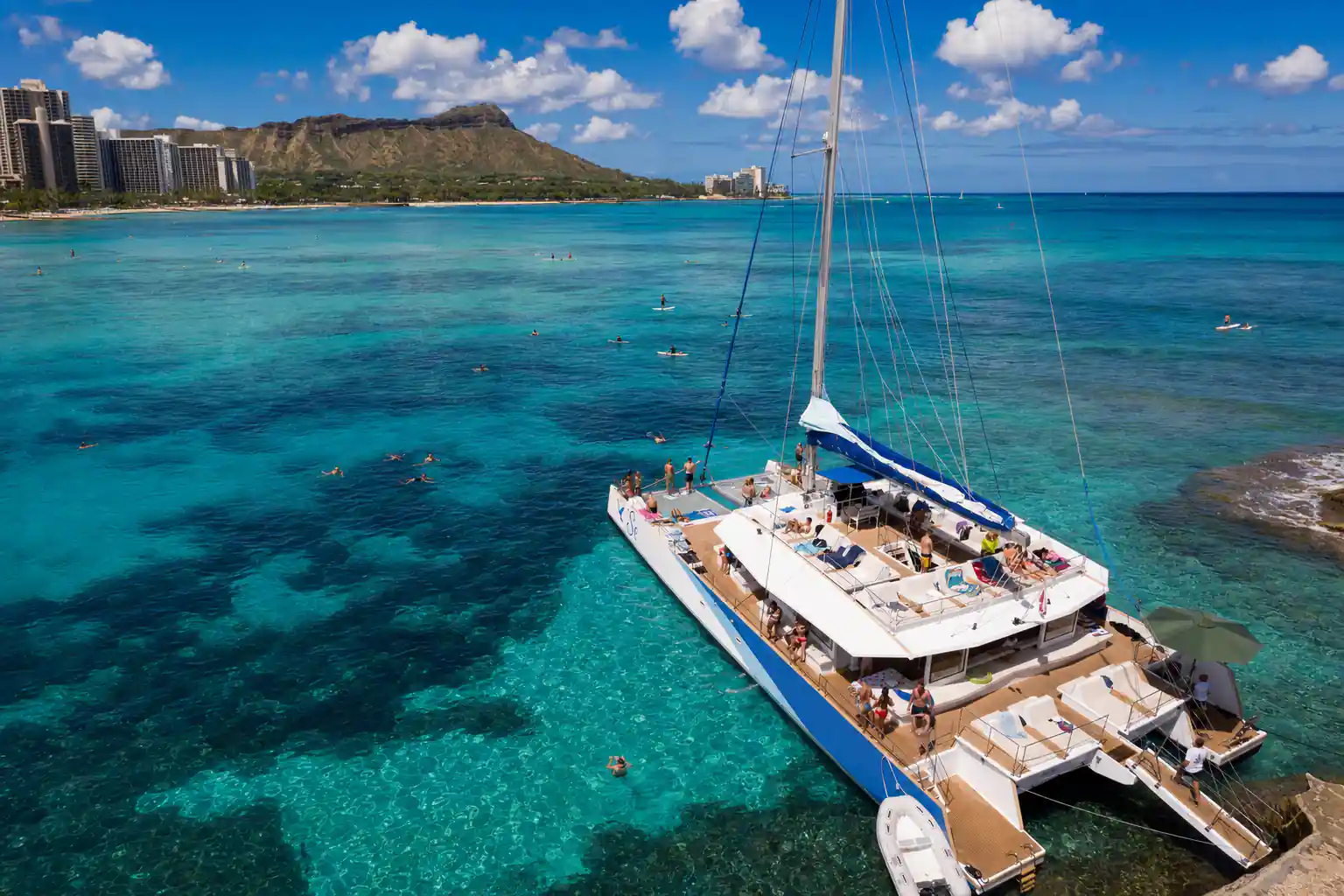
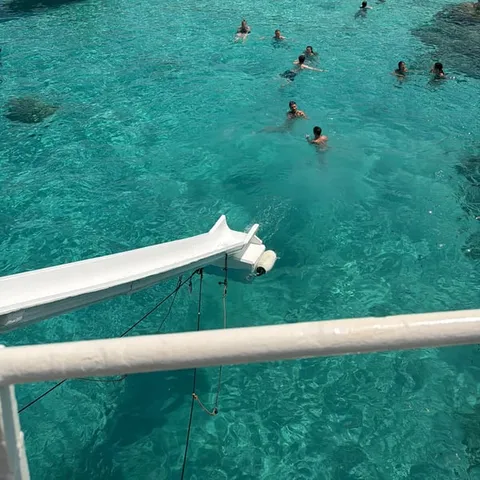
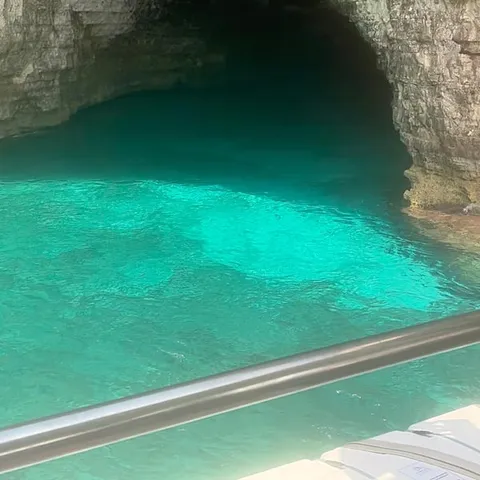
The sandy bottom reaches 14m at its deepest and reflects the light that gives the lagoon its iconic turquoise colour from above.
Anchor Bay and Popeye Village: worth a look from the water
Getting there and booking
What to take and wear
- Sun cream, a hat and sunglasses: the deck has little shade through the middle of the day.
- A rash vest for long swims and a light windbreaker for the breezy ride back.
- Reef shoes or swim sandals for the pebble and rock entry at Anchor Bay.
- A dry bag for phones and a refillable water bottle for the crossing.
Why a village stands in Anchor Bay
Anchor Bay is the small, cliff-backed inlet on Malta's north-west coast, tucked below Mellieħa and a short hop from the ferry crossing point at Ċirkewwa. What sets it apart from the other bays along this stretch is the cluster of wooden buildings sitting on the headland above the water. They were put up as a film set for a musical and left standing when the cameras moved on, and the jumble of painted timber, walkways and little towers has been the landmark the bay is known for ever since. It is the one thing on this coast that could not be mistaken for anywhere else.
From the road the set looks like a village that grew there by accident. From the sea it looks like a model someone set down on the rocks, all steep roofs and crooked chimneys against the pale limestone. Either way, it is the reason the name Anchor Bay means anything to most visitors. The bay underneath is a proper swimming cove: a narrow strip of shingle and rock, clear shallow water at the edges, and cliffs that take the edge off the wind when it picks up in the afternoon.
What happened to the village afterwards
Film sets are usually temporary. This one was not. It stayed, was kept up, and turned into the attraction it is now: a walk-through village of timber houses, walkways and lookouts on the headland, with the bay below used by swimmers. The buildings are the draw, but the position is the real trick. From the top of the site you look along the coast towards Mellieħa and out across the water towards Comino, which is the same view you get from a boat, only reversed.
Anchor Bay kept its own life going too. It is a local swimming spot first and a sightseeing stop second, which is the right way round. Families come down for a morning dip, snorkellers work the rocky edges, and small boats drop anchor in the shelter of the cliffs. In the middle of a high summer day it gets busy, as every bay on this coast does. Early morning and the last hour of light are when the water is calmest and the village above is at its most photogenic from the sea.
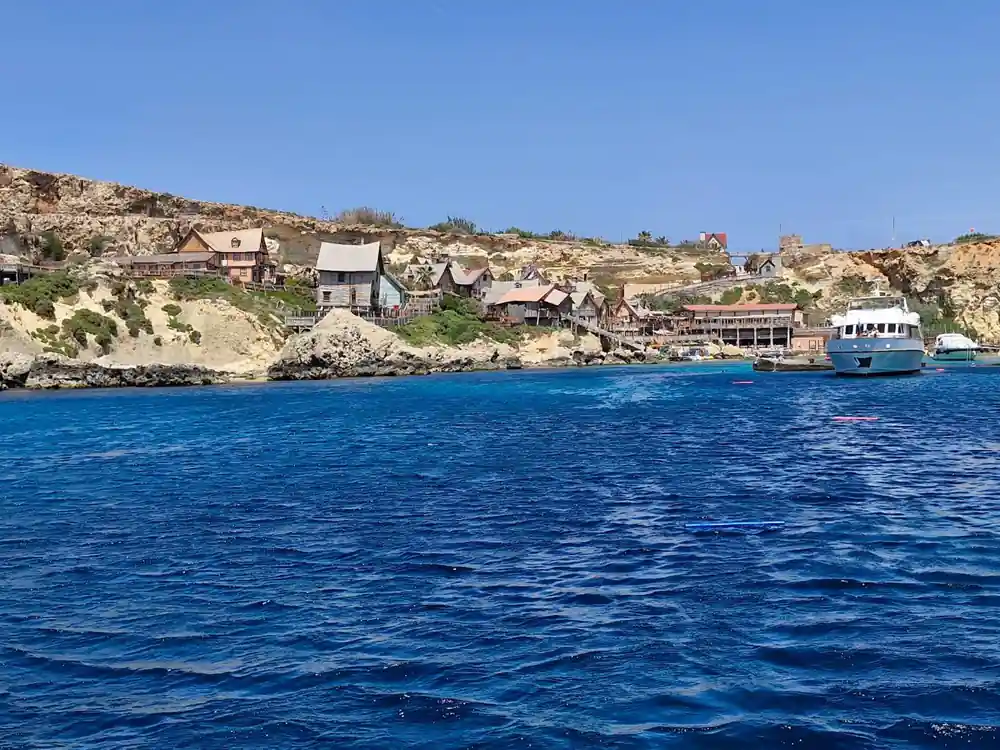
Wooden houses on the headland above Anchor Bay, seen from the water.
How Anchor Bay looks from a boat
Seen from the water, the village reads as a row of wooden roofs on top of a low cliff, and the bay opens and closes around it as you move along the coast. Because the buildings sit above the water rather than at the shoreline, the effect is best from a little way out, with the whole headland in frame: pale rock, green scrub, painted timber, and the shallow shelf of sand and shingle below. This coastline is a run of small bays and limestone points, and Anchor Bay is one of the easiest to pick out.
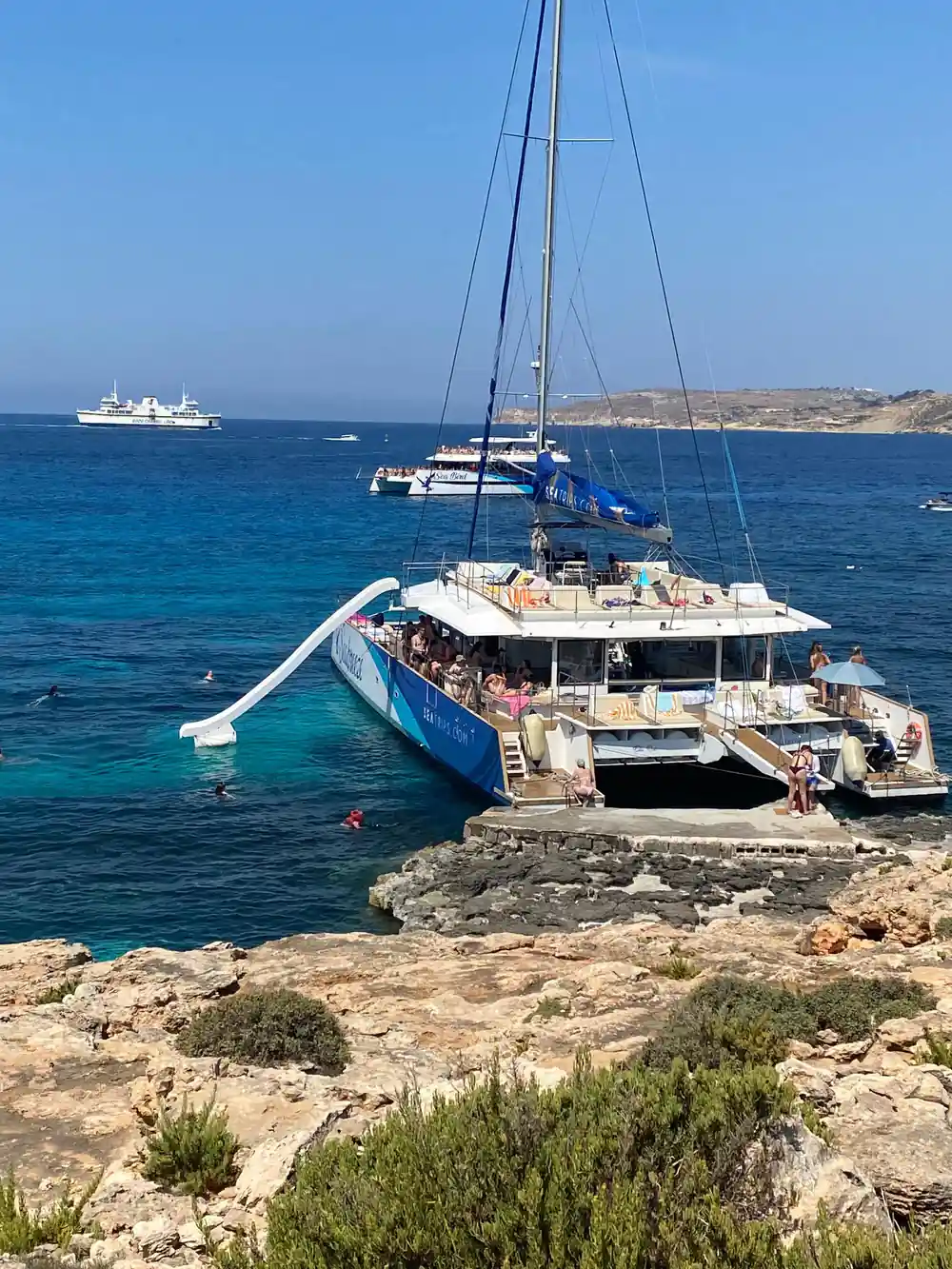
The catamaran trip this site books from Bugibba covers the northern coast on its way to the Blue Lagoon, with a duration of 5 - 6 hours given on the listing.[1] It is listed from US$63[1] and carries a rating of 4.68 from 6,838 reviews[1], with a host or greeter on board who speaks English.[1] That kind of day lets the coast do a lot of the work, and on the way out you get the bays and cliffs in the order they appear on the map, with the village on its headland as one of the markers that tells you where you are.
The bay itself: swimming and shade
Under the village, Anchor Bay gives you the usual Maltese mix: a small pebble and rock beach, a shelf of shallow water, and clearer, deeper water a few strokes out. There is no long sandy beach here, so reef shoes make the entry easier on the feet. Bring water and shade of your own, because the bay faces the sun for most of the day and the cliffs throw almost none. Malta gets more than 3,000 hours of sunshine per year[5], and a still summer day here can feel like all of them at once.
The sea is warm enough for most people from late spring into autumn. Average sea temperatures run at 19°C in May, 22°C in June, 26°C in July, 27°C in August, 26°C in September and 24°C in October.[6] Out of season it drops away quickly: 17°C in January, 16°C in February, 16°C in March and 17°C in April.[6] Air temperatures follow the same curve, with July the hottest month at an average of 27 C and January the coldest at 13 C.[7] If you want to swim rather than watch, aim for the warmer half of the year.
from US$63
The catamaran trip from Bugibba that this site books runs for 5 - 6 hours along the north coast to the Blue Lagoon.[1]
Does the boat stop at Anchor Bay?
This is the question most people arrive with, and the answer depends on the trip. Anchor Bay is a landmark on the coast rather than a lagoon, and the boat days that run out to Comino spend their time around the Blue Lagoon, the Crystal Lagoon and the sea caves. The listing for the catamaran trip describes the day as a Blue Lagoon, beaches and bays trip and gives a duration of 5 - 6 hours[1], with free cancellation up to 24 hours in advance for a full refund.[1]
If walking through the village is the point of your day, treat that as its own outing and give it its own half day. If what you want is the view of the headland from the water with a swim on the same day, look for a trip that runs the north coast, and read the itinerary and the meeting point before you book. Two minutes on the booking page saves a lot of guessing on the morning itself.
It also helps not to think of this coast as one attraction to tick off. Anchor Bay, the beaches towards Mellieħa and the rocky points further north all belong to the same stretch of shoreline, and a boat covers them in a single sweep. Stand at the rail on the way out, find the wooden roofs, and you have your bearings for the rest of the day.
Is Anchor Bay worth caring about?
Yes, though for different reasons than the Blue Lagoon. The lagoon is the swim; Anchor Bay is the picture. It gives a boat day a shape and a landmark you can point at from the deck, and it is a more interesting piece of coastline than a plain horizon. If you are on the island for a week, an hour on land is worth it too, because the village looks quite different when you are standing inside it and the water below is the same water you swam in that morning.
The wider day out is what most people come for. Comino, the small island between Malta and Gozo, is around 2.8 square kilometres in size[8], a Bird Sanctuary, part of the EU Natura 2000 network and a Special Protection Area under the Birds Directive.[9] Santa Marija Tower was built in 1618 by Grand Master Alof de Wignacourt[10], and the Santa Marija Caves are a popular dive site with at least 10 known caves that divers can explore.[11] The 2002 film, the 2024 TV series and La Comtesse de Monte-Cristo used locations on Comino.[12]
The case for Anchor Bay is simple: it breaks up the run north and gives everyone on board something to point at before the boat reaches Comino. The case against over-planning it is that the lagoon is the main event. Enjoy the bay on the way, and save a walk through the village for a day when the sea is rough and the boats stay in.
Planning a north coast and Blue Lagoon day
Peak summer is the busiest time in these waters. In July and August the Blue Lagoon receives between 2,500 and 3,500 visitors per day[4], and Malta as a whole welcomed 3.56 million visitors in 2024, a record-breaking year for tourism.[13] The Crystal Lagoon is a lesser-known and less crowded lagoon a short distance from the Blue Lagoon[14], which makes it a sensible place to swim when the main lagoon is at its fullest. Book early and take the earlier departures if you want room on the deck.
The booking is straightforward. The catamaran trip from Bugibba is priced from US$63[1] for a duration of 5 - 6 hours[1], and it comes with reserve now and pay later and free cancellation up to 24 hours in advance for a full refund.[1] Take a hat, high-factor sunscreen, a refillable bottle, a rash vest for long swims and shoes you can wear into the water. A light windbreaker earns its place on the return leg, when the boat picks up speed and wet swimwear starts to feel cold.
Average sea temperature through the season
Average monthly sea temperatures for Malta from Maltalingua's climate page.[6]
Boat days that pass the north coast
From-prices in US dollars from these GetYourGuide tour listings.[1][2][3][15]
When to go, month by month
How to plan your day
Pick your base
Bugibba and St Paul's Bay sit closest to the northern bays and to the catamaran departure point.
Book the boat
Choose a north coast trip that suits your day; the catamaran runs 5 - 6 hours and is listed from US$63.[1]
Pack for water
Sun cream, a hat, reef shoes for the pebble entry at the bay and a dry bag for the crossing.
Keep time spare
Leave room after the cruise for the village on the headland or a slow swim at the bay.
Watch the forecast
Summer days are long and bright; a light windbreaker covers the breezy return leg.
See the north coast and the Blue Lagoon from a catamaran deck
from US$64Reserve now & pay later